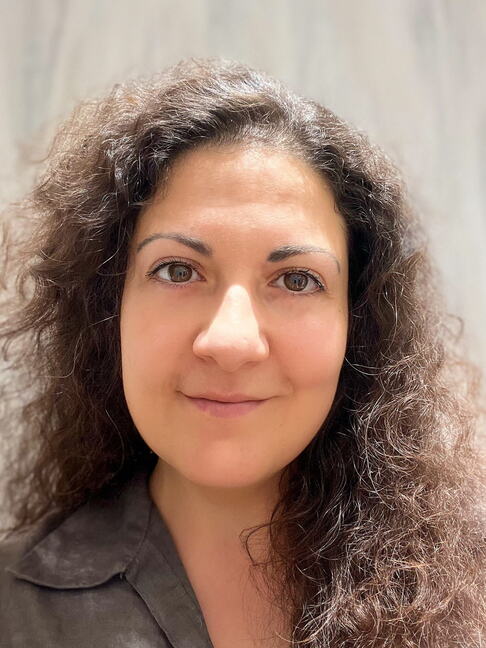
Public defence: Fredrik Fineide
Fredrik Fineide will defend his thesis “Transforming Dry Eye Disease Research: An Artificial Intelligence-Driven Approach to Data Analysis” for the degree of PhD in Engineering Science.
Fredrik Fineide will defend his thesis “Transforming Dry Eye Disease Research: An Artificial Intelligence-Driven Approach to Data Analysis” for the degree of PhD in Engineering Science.
You can follow the public defense on Zoom (oslomet.zoom.us).
Link to thesis: Transforming Dry Eye Disease Research: An Artificial Intelligence-Driven Approach to Data Analysis (nva.sikt.no).
Leader of the public defence: Professor Hugo Lewi Hammer, Department of Computer Science, OsloMet - Oslo Metropolitan University, Oslo, Norway
The main supervisor was Michael Riegler, Head of AI, Research Professor, Simula Research Laboratory & Professor, Faculty of Social Sciences, OsloMet
Co-supervisors:
We are living through a technological revolution. Artificial intelligence (AI) and machine learning (ML) are becoming part of everyday life; from the apps we use to the way doctors diagnose disease. This fusion of technology and science is often called the fourth industrial revolution, and one of its most exciting frontiers is healthcare.
In recent years, ML has shown remarkable potential in medical research. These models can analyse complex data and make predictions that help doctors diagnose diseases faster and more accurately.
As ML models grow more sophisticated, they require large, high-quality datasets to function well.
Medical datasets are expensive to develop, limited in size, often consist of private data, and not always representative of the broader population. This can lead to models that perform well during development but struggle in real-world settings.
Another challenge is transparency: understanding how a model arrives at its decision is crucial, both for scientific progress, and especially when those decisions influence treatment.
This is where explainable AI comes in. By revealing which features a model uses to make predictions, researchers and clinicians can better trust and interpret its output.
For example, if a model predicts the presence and severity of a disease, extracting which symptoms or biomarkers it relied on is of great scientific interest. Similarly, being able to audit a model used in a clinical setting is essential for physicians when making treatment decisions.
One area where this technology could make a real difference is dry eye disease. It is one of the most common yet underdiagnosed conditions in medicine, affecting millions and placing a heavy emotional and financial burden on patients and society. Despite its prevalence, it often goes untreated.
This thesis explores how ML can advance research into dry eye disease. From laboratory, clinical, and hybrid studies, we employ different types of ML models for prediction, dimensionality reduction, feature extraction and computer vision then combine them with expert feedback to better understand both the disease and the models themselves.
We also openly publish our models and source-code as well as a comprehensive dataset of ocular goblet cells.
Our findings suggest that ML and explainable AI can be powerful tools in dry eye disease research. Used conscientiously and in concert with domain experts, these instruments can provide novel connections and reveal important discoveries.