Seven in ten Norwegians say the war in Ukraine has destroyed Norwegian-Russian relations for generations to come
A new survey asked Norwegians how they view their neighbor to the northeast. The results reveal strong support for Norway’s Russia policies and broad support for Ukraine. They also indicate that a large majority recognize the importance of good relations with Russia.
“Were you surprised by the results?”
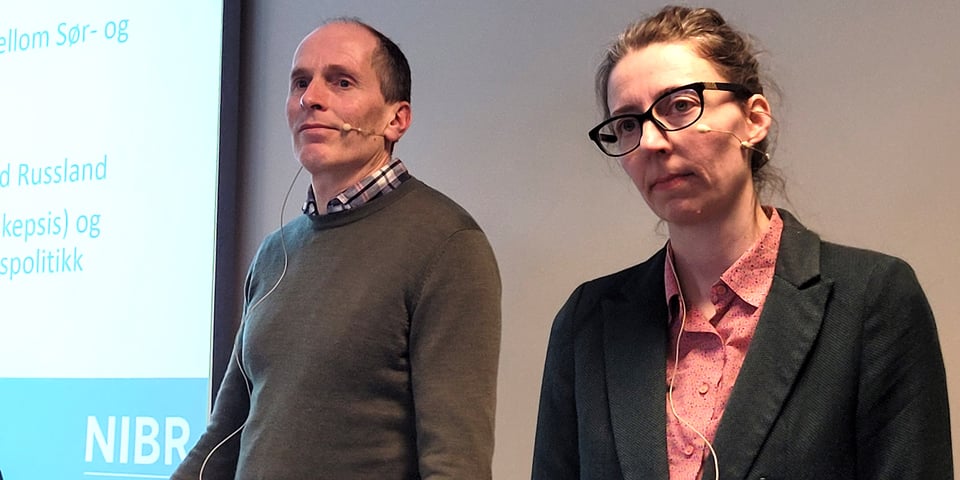
Researcher Aadne Aasland looks out at the audience in Kirkenes, Norway and waits. Artists, journalists, academics and politicians are gathered in this town located only a few kilometers from the border with Russia to take part in the Barents Spectacle and the Kirkenes Conference.
Together with his colleague Marthe Handå Myhre, Aasland has just presented results from a comprehensive survey of Norwegians' attitudes towards Russia and Russians.
But in a twist on the way question-and-answer sessions are typically structured, it is the researcher asking the audience questions. Were they surprised by the results?
Several audience members answer in the affirmative.
“So were we,” Aasland confesses.
The survey, which Aasland and Myhre designed and analyzed the results of, indicate that there is virtually no difference in attitudes toward Russia held by northern Norwegians – who live closer to the country’s 150 kilometer long border with Russia and – and respondents in the rest of the country.
The survey also reveals that:
- Seven in ten Norwegians believe that Russia's full-scale invasion of Ukraine a year ago will damage the country’s relations with Russia for generations to come.
- On the other hand, large majorities of Norwegians (85 per cent in the south and 84 per cent in the north) believe it is important for Norway to have a good relationship with Russia.
- More than 70 percent in both the south and the north of the country believe that Norway should carry on supporting people-to-people collaboration with Russians.
The survey is part of a large research project on cooperation between Norwegian and Russian actors named RE:Barents. The project is based out of Urban and Regional Research Institute NIBR at OsloMet and is led by Aasland.
If it is naive to wish for a good neighborly relationship, the entire Norwegian population largely shares that naiveté
Aasland and Myhre presented their findings in their entirety during the Barents Spectacle. The relative similarity in Norwegians’ views on Russia regardless of where in the country they live surprised many in the audience.
Part of the backdrop for the reaction is a debate about "naive northerners" that flared up, not for the first time, around the anniversary of Russia's full-scale invasion of Ukraine.
“It has been taken a bit for granted that people in Northern Norway have a more sympathetic, positive and almost naive attitude towards Russia. I was surprised that we didn't find bigger differences, says Aasland.
The researchers maintain that this survey goes a long way toward debunking this myth.
“If it is naive to wish for a good neighborly relationship, the entire Norwegian population largely shares that naiveté, “Myhre notes.
Strong support for sanctions
The main tendency throughout the country is the same: most Norwegians want a good neighborly relationship with Russia, but are very critical of the Russian regime and the current state of politics.
The survey was presented on the same day that Norway announced it is joining the tenth European Union sanctions package against Russia.
The latest package contains, among other things, new trade restrictions on technology and other materials designed for both civilian and military use. It also consists of measures against individuals or entities that support the war, whether by spreading propaganda or supplying drones Russia is using in its ongoing war against Ukraine.
“People in northern Norway may have a different relationship with Russia than people in the rest of the country. But that does not translate into different attitudes toward either Russia the country or the Russian people,” Aasland stressed. “Most Norwegians support current Norwegian policy toward Russia.”
The survey data clearly demonstrates this point. Only six percent in northern Norway and seven percent in southern Norway think Norway should lift all sanctions against Russia.
More favourable views of Russia closer to the border?
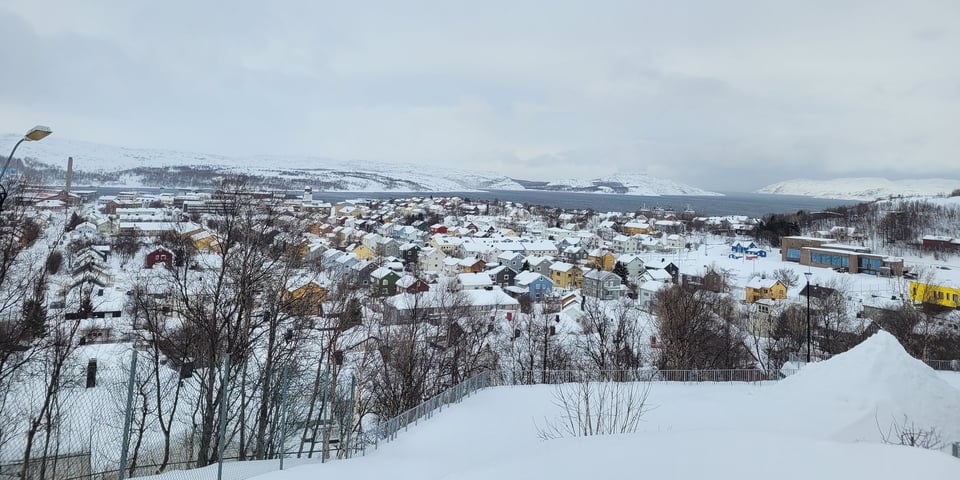
Kirkenes is Western Europe's easternmost border with Russia. Storskog, Norway's only border crossing with Russia, is located only fifteen minutes drive away. Kirkenes has a significant Russian-speaking minority, and the citizens have traditionally had extensive contact with people and institutions across the border.
Given the proximity of Kirkenes and the surrounding region, known as Eastern Finnmark, to neighbouring Russia, the researchers wanted to investigate whether people there differ in their attitudes toward their neighbor as compared both to Northern Norwegians and Norwegians at large.
With this in mind, the researchers looked especially closely at the responses given by Norwegians who call this border region home. They found that respondents in the region do hold somewhat different views of Russia:
- 15 percent in Eastern Finnmark believe Norway should lift all sanctions against Russia, compared to 6 percent in Northern Norway.
- 20 percent in Eastern Finnmark believe Norway must stop sending weapons to Ukraine, compared to 13 percent in Northern Norway.
- 93 per cent in Eastern Finnmark believe it is important for Norway to have a good neighborly relationship with Russia, compared to 84 per cent in Northern Norway.
However, when the researchers controlled for whether people had a personal connection to Russia, the differences disappeared.
“After controlling for whether respondents had a personal connection to Russia, the results were generally quite similar to the rest of the country,” Aasland told us. “It's just that there are more people living in Eastern Finnmark who have a stronger connection to Russia. By stronger connection, we mean that they may have visited the country a number of times or have family there, just to name two examples.”
In 2015, after Russia's annexation of Crimea, the then Minister of Defense Ine Eriksen Søreide said in an interview with CNN that the relationship with Russia has fundamentally changed.
“At the time, the statement attracted a number of critical comments, particularly in the North. After the invasion, this view appears to be shared by a solid nationwide majority. At the same time, our survey shows a pragmatic understanding that our neighbor to the east is not going to disappear any time soon,” the two researchers concluded.