From PhD candidate to full-time faculty member
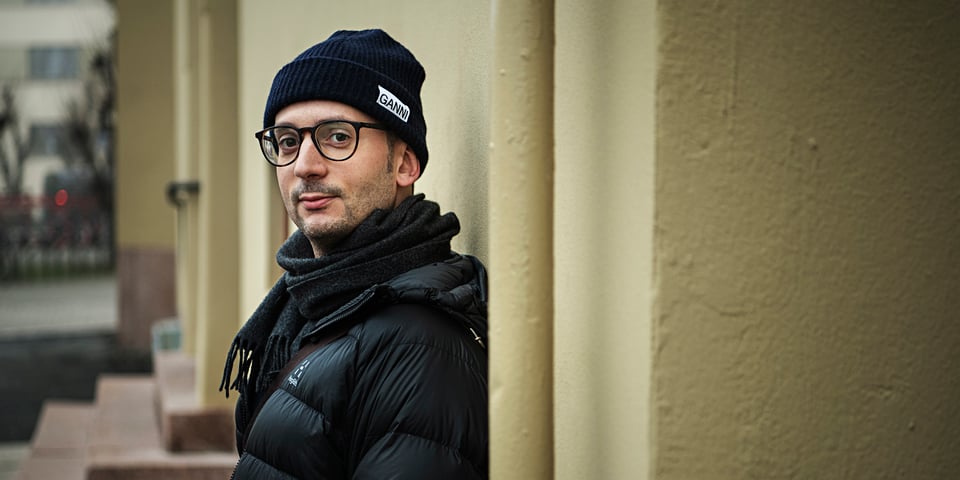
Marco Tagliabue arrived in Oslo from Italy in February of 2015 armed with just two suitcases and an ambition to pursue his doctoral studies. Then he never left.
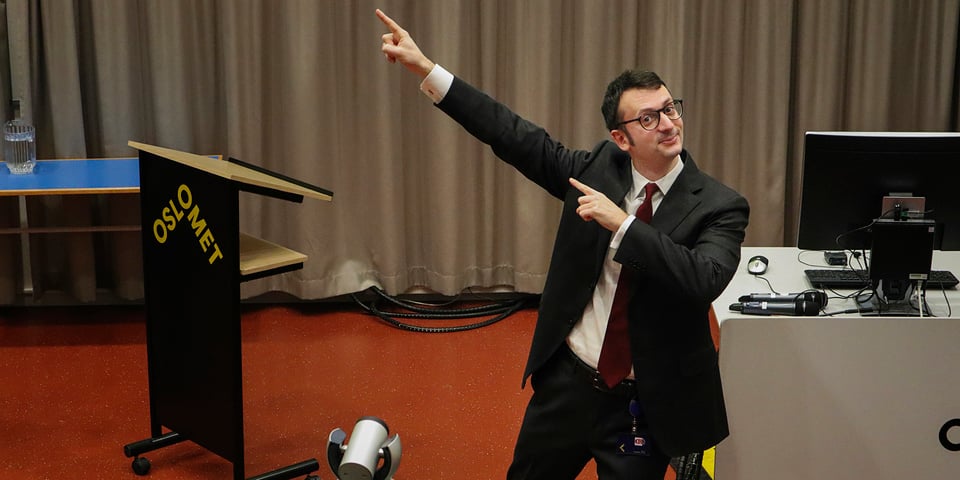
After completing his PhD at OsloMet in 2020, Tagliabue accepted an associate professor position at the Department of Behavioral Sciences. Tagliabue’s current research focuses on the power of nudging to influence human decision making.
Making the move
What a decision he made to move to Norway!
Although he got off to a bumpy start securing housing before the university’s offerings to better accommodate foreign employees were in place, he still appreciates every step in his journey. He first moved into an apartment he shared with three other people, but the Italian native didn't plan to live there very long.
"The idea back then was to use the shared apartment as a temporary base, but I just happened to stay there much longer than I was planning to," Tagliabue recalls.
"It was a great decision, I think. Not only because it was within walking distance from campus, but also because it was a good way to meet people, start exploring the city, and integrate here."
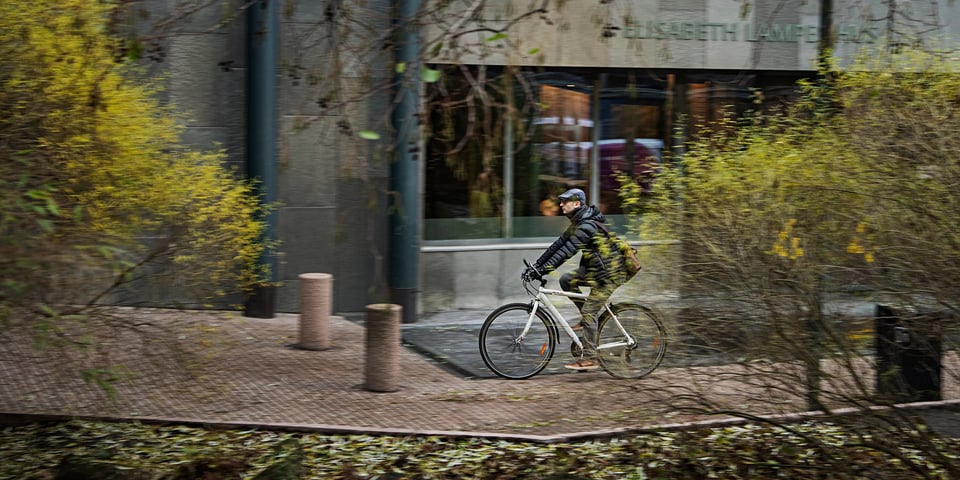
He has a genuine appreciation for the downtown campus's structural layout and architecture, from the old brick buildings at the northern end to the modern, glass buildings that anchor the surrounding blocks.
The central courtyard serves as an informal gathering space for faculty and students walking between buildings. This campus feeling is something he missed while pursuing his bachelor's and master's degrees at the University of Turin.
"One of the points of pride of OsloMet is being branded as a European university,” the Italian native tells us.
“This is reflected when you look at the campus in the city centre and have a bit of this romantic feeling of it being the former brewery."
"In addition, being located conveniently in the city allows you to get pretty much everywhere just by taking a short walk after work. You can go out for an ice cream down at Aker Brygge where you can sit outside and watch all the boats coming and going. I really love the sea."
Exploring beyond Oslo
Like a boat at sea, Tagliabue has had several opportunities to travel for work since his time as a PhD candidate.
He received financial support to spend ten days teaching in Iceland, a country that otherwise would have been cost prohibitive for him to visit.
He also took a trip to Thessaloniki in Greece, where he cooperated with the local nudging networking association to learn how to set up his own back in Norway.
He has been impressed by OsloMet's administrative support applying for and securing both internal and external research grants.
"They require a lot of work. Everyone, I think, would agree with that. There is no easy money. The competition is only getting tougher," he notes.
One of the points of pride of OsloMet is being branded as a European university.
With backing from a dedicated research and development department, Tagliabue has attended courses on grant writing co-organised with the Research Council of Norway and the external application team at OsloMet.
"They are just there to help because it is a team success if the money comes in, and then we all celebrate!"
If he had one wish, it would be to have designated work hours dedicated to this time-consuming process for individual faculty members and not just the research groups.
"It cannot be left to chance or only as a task to do in our spare time when we are not overwhelmed with the other activities that we are supposed to do on a daily basis."
A personal milestone
Of all his experiences so far at OsloMet, Tagliabue admits the highlight was his successful defense of his dissertation. The long journey of sacrifices culminated in a moment of pure emotion that he was fortunate enough to share with those closest to him.
"I am very thankful to have been able to do it in person with my family. They were able to fly in and joined my colleagues, friends and the committee. I'm very grateful that it went well, and it was a very rich experience for me,” says Tagliabue.
“Of course, I am also very grateful to have the opportunity to continue teaching and researching and carrying on with my activities at OsloMet."
Working at OsloMet
A PhD experience that opens up a world of possibilities
Mariya Khoronzhevych is working toward her doctorate in social work and social policy. Along the way, she has had rewarding off-campus experiences that offer a complement to her professional journey at OsloMet.
International impulses at Norway's most urban university
Between the multicultural city of Oslo, colleagues from around the world, and a strong commitment to Open Access publishing, prospective PhD students and researchers will encounter a diverse, international environment at OsloMet.
Oslo in the summertime
The sun doesn't set until close to midnight, and even then it never really gets dark. You can spend the evening watching the light change at an outdoor café with friends, or go for a relaxing swim in the fjord alone. Oslo in the summer is a pretty magical place.
Living in Oslo means a high quality of life
The verdict from international academics at OsloMet is crystal clear: The workplace is great, the city is cosy, and the scenery is awesome. And Norwegians? Read on to find out.
International inclusion from day one
Through a comprehensive onboarding programme and departmental social activities, new international employees at OsloMet are made to feel welcome the moment they set foot on campus.
Get to know OsloMet
Through the students we educate and the knowledge we produce, Norway's most urban university helps drive the welfare state forward.