Is envy driving us when we vote?
People are more likely to take benefits away from others when they can hide in a large group where the majority decides, according to new research.
Kort oppsummert
- Researchers at OsloMet and Linköping University investigated how people allocate money when voting in groups compared with making decisions on their own.
- Participants who voted were more likely to prevent others from receiving more than they did, even when it provided no benefit to themselves.
- The researchers interpret this as a sign of envy and suggest that the explanation may be that responsibility feels shared when decisions are made by majority vote.
- The findings may help explain why voters sometimes support redistributive policies that do not maximise overall welfare.
The summary box was created with the help of Microsoft Copilot. The text has been reviewed and quality-assured by OsloMet.
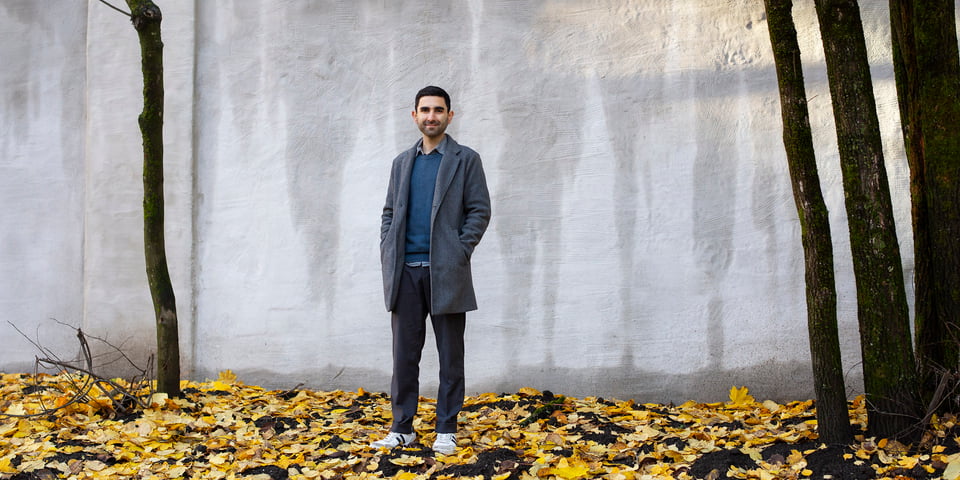
“As humans, we don’t just care about how well we're doing. We also care about how well we're doing compared to other people,” says Lewend Mayiwar, professor of organisational psychology at Oslo Business School.
Together with researchers from Linköping University in Sweden, he investigated how people distribute resources between themselves and others when voting as part of a group compared to when making decisions on their own.
“We wanted to test whether voting in larger groups affects how much consideration we give to other people.”
Choose between different ways of distribution
The researchers conducted experiments in which participants took part in several economic games. In each game, they had to choose between two different ways of dividing money.
In one of the games, participants faced the following choice:
- Option A: I get NOK 40, and you get NOK 40.
- Option B: I get NOK 40, but you get NOK 50.
Participants in one group made an individual decision about how the money should be distributed.
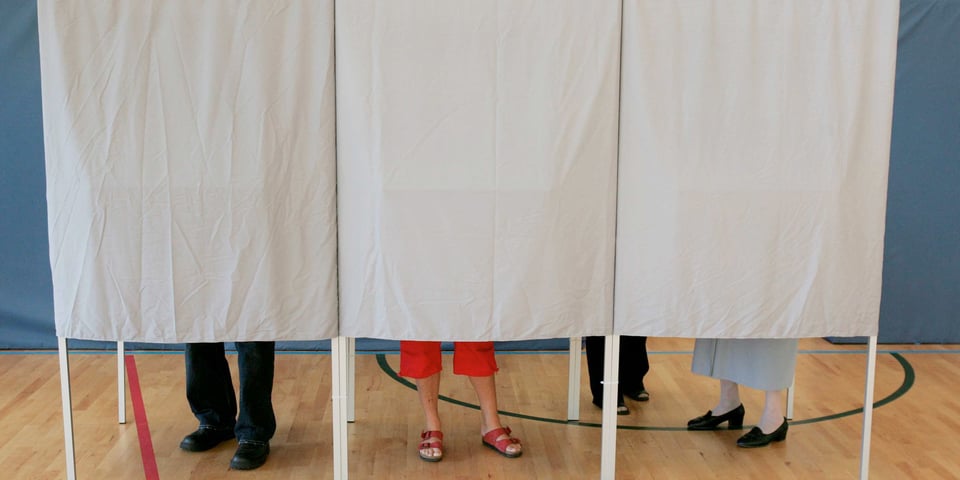
Participants in the other group voted anonymously, and the majority decision determined the outcome. The groups were large enough to make it unlikely any single vote would decide the result.
More willing to stop others getting more
The researchers first carried out the study with 500 Swedish participants. They later tested the findings again in a larger, pre-registered study with twice as many participants from the United Kingdom.
“We found exactly the same pattern in both studies,” says Mayiwar.
Those who made decisions individually were more accepting of the other person receiving a little more money. Those who voted, however, were more likely to choose the perfectly equal distribution.
“The people who voted were more willing to ‘burn’ other people’s money,” says Mayiwar.
In other words, they were more willing to reduce someone else’s advantage even though they gained nothing themselves and did not increase overall welfare.
The researchers interpret this as an expression of envy.
“The choice isn’t really rational. I receive exactly the same amount of money in both options, and total welfare is higher if the other person gets a little more,” says Mayiwar.
Letting envy take the wheel
The researchers believe the reason people behave differently when voting is what is known diffusion of responsibility.
“When you make an individual decision, you feel responsible. You may think, ‘It doesn’t look very good if I choose to reduce someone else’s gain,’” says Mayiwar.
But when you cast a secret vote in a large group, there is little personal cost to voting for an option that takes money away from someone else.
“My choice isn’t as visible. If the majority votes the same way I do, I don’t have to feel personally responsible, and nobody can point the finger at me. We share the responsibility,” he explains.
“If it’s just you and me sitting together, of course I’ll say that it’s perfectly fine for you to get ten dollars more than I do.”
But when we feel less responsible for the outcome, it becomes easier to let envy influence our decisions.
“I can relate to it”
Mayiwar says the researchers were surprised by the results.
“At the same time, I can relate to this. We like to see ourselves as moral, prosocial people who help others. But equality is also very important to us. There’s a psychological tension there.”
He uses salary as an example.
“I might earn 600,000 kroner and think that’s a good salary. Then I find out that you make 650,000. My salary hasn’t changed, but I know you have a little more than I do. Suddenly it doesn’t feel so good anymore.”
“It doesn’t feel good when other people have more than you do, even though we genuinely want other people to do well.”
Could reduce overall welfare
In research experiments like this one, relatively small amounts of money are typically used. Mayiwar says there is no way to know for certain whether the outcome would have been the same if much larger sums had been at stake.
“You could imagine that the pattern we found would be even stronger if more money were involved,” he says.
The researchers believe their findings may have implications for democratic decision-making and political economy more broadly.
“Voting situations are everywhere. Not just in political elections, but also in organisations and many other settings where decisions are made collectively,” says Mayiwar.
He believes the findings may help explain why voters sometimes support redistributive policies that do not necessarily maximise overall benefits for society.
“Democracy is a good thing, but some aspects of democratic decision-making can have negative consequences,” he says.
“Voting can activate envy, and that may leave society with less overall welfare than we otherwise could have had.”
Reference
Hansson, K., Barrafrem, K., Mayiwar, L., Persson, E. and Tinghög, G. (2026). Envy in the ballot box: How voting influences distributive preferences (sciencedirect.com). European Economic Review.