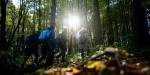
Experience Nordic childhoods through play, movement, and active learning in the Nordic context. Through hands-on activities, field trips, and reflective practice, students gain insight into Nordic perspectives on childhood, education, and sustainability while developing practical skills for diverse educational settings.
Admission requirements
This course is designed as a full-time study programme for students in Early Childhood Education and Teacher Education.
Applicants must have completed at least two years of undergraduate studies at their home institution. Students from related academic fields (e.g. pedagogy, social sciences, sports sciences) are also welcome to apply and will be individually assessed to determine suitability.
Students must be prepared to participate in practical activities in both outdoor and indoor learning environments.
How to apply
International exchange students select courses when applying for exchange.
The application deadline for the autumn semester is 15 April.
Content
The course combines academic perspectives with practical and experiential learning. Alongside theoretical lectures within these topics, including an introduction to academic reading and writing, a central element is students’ own participation in play, movement, and educational activities.
These are explored through outdoor experiences and excursions, as well as movement-based activities in indoor learning spaces.
The course is grounded in Physical Education and Natural Sciences and emphasizes learning through experience, exploration, and reflection. Students will examine how play, movement, and nature-based education support children’s learning, well-being, and development within Nordic educational traditions.
By completing the course, students will gain:
- insight into childhood from a Nordic perspective, including the Nordic welfare model
- practical and theoretical competence in play-based, movement-oriented, and outdoor education
- experience in planning and facilitating educational activities and courses for children (and other groups)
- knowledge and experience of working in intercultural and dialogic learning environments
Teaching methods
Teaching and learning in this course are highly interactive and experience-based. Students take part in lectures and dialogue-based teaching, combined with extensive practical activities in indoor and outdoor environments.
Smaller excursions, hiking trips, and a few short overnight outdoor trips are key components of the course and provide opportunities to learn through direct engagement with movement, play, and nature.
Learning activities include hands-on training, collaborative group work, and reflective practice, as well as reading academic texts, writing assignments, and giving presentations.
Throughout the course, students are encouraged to connect theory and practice, reflect on their experiences, and develop professional competence in movement-based and outdoor education within an international learning environment.
Course description
For more information about this course, take a look at the course description:
Costs
There is no semester fee for exchange students. However, you may have to pay some costs related to field trips.
Questions about this course?
You can contact us by e-mail if you have questions about this course.