"Something that is durable is meant to be used. It’s not supposed to just sit there as decoration," says Professor Kristin Skare Orgeret.
She leads OsloMet’s thematic research initiative A Durable Democracy. The goal is to explore the links between democracy, the public sphere, trust, knowledge, and societal resilience – and how democracy can be further developed, strengthened, and made more robust.
A durable democracy isn’t about avoiding conflict, she argues. It’s about building systems, institutions, and meeting places that can handle friction and everyday wear and tear.
"We shouldn’t be so afraid of disagreement. That’s actually what makes our democracies viable."
Anti-democratic currents
Skare Orgeret believes this initiative is especially important right now.
"We’re seeing strong anti-democratic currents around the world right now. We’re living through a period of major geopolitical change."
International democracy indices, such as the annual report published in March 2026 by the Swedish research institute V-Dem (PDF, v-dem.net), show a global downward trend – even in countries that have long been considered stable democracies.
"For the first time in more than 50 years, the United States is no longer classified as a liberal democracy. That’s quite remarkable," she points out.
"We have a responsibility"
Norway still ranks highly in many international comparisons – when it comes to democracy, freedom of expression, and public trust.
"Only seven percent of the world’s population lives in liberal regimes. We’re incredibly fortunate. And that’s exactly why we also have a responsibility to research how we can safeguard and develop democracy, protect vulnerable groups, and ensure diversity and active citizenship," Skare Orgeret says.
No democracy without trust
Every year, the World Economic Forum publishes a list of what it considers to be the greatest threats facing humanity.
For the second year in a row, disinformation tops the list (weforum.org).
"Trust is fragile. It takes a long time to build, but it can be torn down very quickly. And this isn’t just about politics and democratic institutions – it’s also about trust in knowledge and research, says Skare Orgeret.
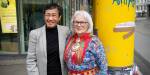
She refers to journalist and Nobel Peace Prize laureate Maria Ressa, who will be appointed an honorary doctor at OsloMet this June.
"Ressa points out that without facts, we can’t have truth. Without truth, we can’t have trust. And without trust, we don’t have a shared reality – and in practice, we don’t have a democracy either."
Skare Orgeret believes research communities would benefit from being more open about their work processes.
"Good research isn’t enough if people don’t believe in it. Sharing ideas, hypotheses, and methods along the way helps build trust and strengthen democracy. That will be an important part of this initiative."
From cradle to grave
Skare Orgeret also believes OsloMet is particularly well suited to lead a major research initiative on democracy.
"We offer education that follows people from cradle to grave. OsloMet has deep roots in the professional disciplines, which gives us strong connections to society and to our democratic system."
This creates unique opportunities for research that is critical, socially relevant, and practically useful.
"We’re well positioned for many exciting projects that approach the challenges and opportunities facing democracy from different angles – including research partnerships with both the public and private sectors."
Research across disciplines
Skare Orgeret hopes the initiative will also encourage new thinking across traditional academic boundaries.
As a professor at the Department of Journalism and Media Studies, freedom of expression, media development, and trust have been central themes throughout her career.
"I see the concept of democracy from my own perspective, but I’m very glad to have a steering group made up of people with completely different backgrounds who can challenge my assumptions. I’m really looking forward to gaining insight into other ways of understanding what lies at the core of democracy and what its main pillars are. There are many different answers to that question."
More about the strategic research areas
-
Strategic research areas
OsloMet's four strategic research areas aim to promote and strengthen the university's research and knowledge development in key areas. The strategic research areas will last for five years, from 2026 to 2030.
-
A Durable Democracy
This strategic research area explores how democracy can be strengthened and further developed in the face of challenges like weakening democratic structures, increased disinformation, polarization, and declining trust.