
Norwegian version

The siblings who found their future in geotechnical engineering

Portrait of Sajida and Sarfaraz looking through window at an instrument in the lab

This autumn they’ll start as full-time employees at the Norwegian Geotechnical Institute (NGI).

Along the way, they’ve discovered that geotechnical engineering is about far more than soil samples and tubes. It’s a field with global demand, high societal value and endless opportunities for anyone who is curious about how our world is built from the ground up.

Practice meets coincidence

When they started their bachelor’s degrees in civil engineering at OsloMet, neither of them knew much about geotechnics.

“We knew nothing about geotechnical engineering before the second year. We had a small introductory course, and at the same time I got a part-time job in NGI’s laboratory. That’s when we realised how important and exciting this field actually is,” says Sarfaraz.

They eventually came to understand that geotechnics is the literal foundation of everything that gets built.

“Securing solid ground conditions is crucial whether you’re building a road, railway, apartment building or offshore wind turbines. It’s about safety, climate, society and the future,” says Sajida.

When they discovered OsloMet’s Master’s Programme in Geotechnical Engineering – developed in close collaboration with NGI – the choice was easy.
Facts: Geotechnical Engineering

On The Geotechnical Engineering Master’s Programme, you will learn how to work with materials such as soil and rock to solve a wide range of engineering problems, typically using hydrological, geological and geophysical techniques.

Compared with other branches of civil engineering, geotechnical engineers carry out more site-based field investigations and laboratory testing in order to characterise and classify the properties of geomaterials.

Theory and practice in perfect balance

The siblings highlight the OsloMet–NGI collaboration as essential for their motivation and learning.

“At university, you learn the theory – at NGI, you get to see everything in practice. Suddenly the pieces fall into place, and you see the whole picture,” says Sarfaraz.

In the lab, they’ve worked with everything from samples taken from 40 metres below the surface to advanced tests that measure soil strength, stability and safety.

“It makes us feel more confident in the field. And it’s very motivating to work with some of the best geotechnical experts in the world,” he adds.

Sajida nods:

“Everyone is so willing to help. If you want to learn, there are no limits to what you can achieve.”

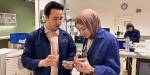
Sajida and Sarfaraz look at soil samples in small jars that they hold in their hands. Lab equipment in the background.

Sajida and Sarfaraz examine samples in the lab. Photo: Krister Jung-Lian

A job with real meaning

Both agree that geotechnics feels like the right and meaningful choice.

“Geotechnical engineers make assessments that can prevent landslides, accidents and disasters. That carries a lot of responsibility, but it also gives the job real meaning,” says Sajida.

“We help build society – literally. Everything we do is about safety. Coming from Northern Norway, where nature can be quite brutal, we really understand how important this field is,” adds Sarfaraz.

A safe job market

While many industries face uncertainty, the demand for geotechnical engineers is high – and growing.

“It’s reassuring. We know we’re entering a field where we are needed. Not just in Norway, but worldwide,” says Sarfaraz.

“And the salaries are competitive. That’s a nice bonus,” Sajida adds with a smile.

A small, close and supportive student environment

The Master’s Programme in Geotechnical Engineering is small – and that’s exactly what makes it great, according to the two siblings.

“There aren’t many of us, and most work part-time at NGI. This makes collaboration easy, and it’s very natural to ask the lecturers for help. Many of them work at NGI too, so we feel very connected to the professional environment,” says Sajida.

“That’s one of the best things. Our lecturers are researchers and experts whom we also meet in the hallways both at the university and at work,” says Sarfaraz.

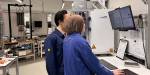
Sajida and Sarfaraz study lab data on a computer screen on the wall. Lab equipment in the background.

Sajida and Sarfaraz study lab data on the screen. Photo: Krister Jung-Lian

Writing their master’s thesis together

The siblings are writing their master’s thesis together through NGI and OsloMet. And although there are some differences of opinion along the way, the collaboration works surprisingly well.

“We’ve worked together for years, and we know each other. The final result is what matters,” says Sarfaraz.

“And we get excellent guidance from both OsloMet and NGI. It makes the whole process more concrete and much more educational,” says Sajida.

What would they like to say to students who are considering geotechnics?

They answer without hesitation:

“Don’t be scared off by the fact that the field might feel new or unfamiliar. Geotechnics is much more than soil tests – it’s technology, climate, safety, society and research. There’s so much to learn,” says Sajida.

“And you’ll get an education where you’re almost guaranteed a job. If you’re curious about how things are built – and why foundations stay in place – geotechnical engineering is the perfect choice,” says Sarfaraz.

They are now looking forward to starting full-time at NGI.

“The plan is to learn as much as possible. Later on, we’d love to explore other departments and fields. Geotechnics is so broad that you can shape your own path,” the siblings conclude.

Student stories

Portrait of Sajida and Maryam in the lab. Lab equipment and other students in the background.
Aspiring geotechnical engineers with part-time jobs at the NGI Lab

Sajida Ali Rizai is pursuing a master's degree in geotechnics. Maryam Sadat is applying for the same specialisation after the Bachelor's Degree Programme in Civil Engineering.