The project Teacher Research Literacy (TREL): Comparative Trajectories in the Nordic-Baltic Region investigated how research literacy is understood and developed in teacher education and how student teachers can be supported in engaging critically and practically with research. The project was led by the University of South-Eastern Norway and OsloMet.
“Teacher research literacy is not simply about learning research methods", says project manager Dina Tsagari, Professor at the Department of Primary and Secondary Teacher Education at OsloMet.
"It involves being able to understand, evaluate, use and conduct research in ways that inform professional judgement and classroom practice".
She further explains that research literacy can help teachers examine questions arising from their own classrooms, evaluate educational evidence, reflect critically on their practice and make informed decisions that respond to the needs of their learners.
An open-access toolkit for teachers and teacher educators
One of the main outcomes of the project is the open-access handbook Teacher Research Literacy Development: A Toolkit for Teachers and Teacher Educators (mau.se). The book brings together research, examples of practice, reflective activities and practical resources developed through collaboration among teacher educators, researchers and teachers.
Rather than presenting research as something produced only at universities, the handbook positions teachers as critical users and potential producers of professional knowledge.
“The toolkit is intended to support the development of research literacy throughout teacher education and teachers’ professional lives. It offers practical ideas that can be adapted to different educational contexts,” says Tsagari.
She explains that the handbook is relevant to student teachers, practising teachers, teacher educators, school leaders and others interested in strengthening research-informed teaching and professional learning.
What happens after teachers enter the profession?
The TREL project also raised an important question: What happens to teachers’ research literacy when they move from teacher education into full-time work in schools?
"Early-career teachers may leave university with experience of reading, evaluating and conducting research. However, maintaining this engagement can be difficult amid the demands of everyday teaching, limited time and uneven access to professional support", says Tsagari.
Now, a new follow-up project will explore how early-career teachers use and sustain their research literacy after entering the profession and how schools and teacher education institutions can support them.
The new project, Research Literacy in Practice: Tracking and Supporting Early Career Teachers (ReLiP-ECT) began in August 2026 and will run until August 2028.
ReLiP-ECT brings together universities, schools, teacher educators, early-career teachers, experienced teachers, school leaders and other educational partners from Norway, Sweden, Denmark, Finland, Iceland, Estonia, Latvia and Lithuania.
Building supportive professional communities
ReLiP-ECT will also establish mentored communities of practice in which early-career teachers can collaborate with experienced teachers, school leaders, and teacher educators.
These communities will provide opportunities to discuss classroom challenges, engage with research, develop small-scale inquiries and share experiences across schools and countries.
“We want to understand what individual teachers do, but also which conditions make sustained research engagement possible. Schools, school leaders and teacher education institutions all have important roles to play here” says Tsagari.
Both projects are funded by Nordplus Horizontal, which supports collaboration and innovation in education across the Nordic and Baltic regions.
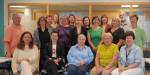
In the photograph, participants in ReLiP-ECT are gathered at the project kick-off meeting at OsloMet.
