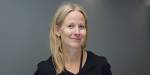
«Research makes education more relevant, and our students gain access to new knowledge that is relevant to those who work with children, adolescents and young adults. When the students get a job, they therefore have a broad understanding of how they themselves can contribute in society. In addition, our research contributes to policy development that will have an impact on our society», says Sølvi Mausethagen, Vice Dean for Research and Development at the Faculty of Education and International Studies at OsloMet.
The faculty has 68 PhD candidates and several post-doc candidates who are central to the research carried out at the faculty. Students also get to participate in research through their bachelor's and master's theses.
Strong international research communities
«Our researchers form some of Norway strongest academic teams in our fields in Norway, and some are even strongest both in the Nordic countries and Europe. This is particularly the case for our teams working with interpretation, both between languages and Norwegian sign language, and vocational teacher education», continues Sølvi.
The researchers also make their mark internationally by participating in research networks and publications. Our researchers in development studies has many partners all over the world and works with sustainability and inequality, among other things. The Department of International Studies and Interpreting provides training for students from all over OsloMet who want to travel to other countries as exchange students.
The project «Rivers as legal persons» has investigated whether giving rivers legal rights makes it easier to strengthen their protection. This is part of an international movement with more than 500 initiatives all over the world, and which has also provided a new perspective on how to treat Norwegian nature, such as the Oslo Fjord.
Cultural heritage, transitions to work for vocational students and digital empowerment
The faculty have a number of projects funded by the Norwegian Research Council. One of these is the Vibrant Connections project, running from 2023 to 2027. The project investigates how kindergartens can be a cultural arena in today's society. The researchers collaborate with 14 kindergarten departments to investigate and strengthen the use the employees’ own musical baggage in kindergarten and in the kindergarten education here at OsloMet.
The School4Work project aims to develop knowledge that vocational teachers can use to help pupils transition into working life. The main purpose is to help reduce dropout rates in upper secondary school. This project runs until 2027.
This spring, another major research project, EMPOWERED, will start. The researchers will collaborate with Nordre Follo Municipality to develop practices, methods and tools to contribute to digital empowerment in schools and teacher education.
Research partner in policy development
Researchers at the faculty participate in several commissioned research projects. For instance, Elisabeth Bjørnestad from the Department of Early Childhood Education was in the lead for evaluating the Six-Year Reform on behalf of the Norwegian Directorate for Education and Training in 2024.
Recently, a report investigating how teachers and leaders employed in kindergartens and schools contribute to collaboration where the purpose is to strengthen the quality of teacher education. The findings show that they participate in a broad scope of collaboration with the teacher education programmes, in addition to having teacher students in practice at their institutions.
Diverse research groups
All permanent academic staff at the Faculty of Education and International Studies are members of one or more research groups. The same applies to the faculty's PhD and postdoctoral fellows. With four new research groups from 2026, the faculty now has 34 research groups. The diversity of the research groups shows the breadth of expertise and research interests among our employees.
«We are proud to have so many active and good researchers at the faculty, who also collaborate closely with the fields of practice they educate for,» concludes Sølvi Mausethagen.
The four new research groups are:
