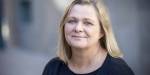
“I want pupils to understand climate change in a deeper, more concrete way that evokes stronger emotions,” says Demirbacak.
In September, Deniz Atal Demirbacak came to Norway from Ankara University in Turkey through the Marie Skłodowska-Curie Actions Postdoctoral Fellowship initiative (ansatt.oslomet.no). After two months of handling the practicalities of moving to a new country with her partner and child, she is ready to immerse herself in the research.
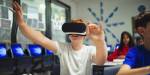
Over the next two years, she will explore how using VR in teaching can strengthen lower secondary pupils’ understanding of climate change and inspire them to take action.
Designing experiences to spark emotion
To do this, she will design VR experiences that allow the pupil to see, hear and, at times, interact with environments affected by climate change. The tool will also show pupils how their own actions can influence outcomes, for better or worse.
“VR is a powerful tool because it takes the pupil directly into the situation. The experience captures their attention, reduces distractions and helps them build an emotional connection to the content. Here, they can observe cause and effect in a way that cannot be conveyed through textbooks and videos,” she says.

Deniz Atal Demirbacak is aiming to inspire youth to act.
Needs to work in a real classroom
To ensure the tool genuinely supports teaching, she will interview teachers and pupils, as well as VR experts. For Demirbacak, it is essential that such a tool is pedagogically relevant, meaningful and aligned with the curriculum — and that it works in real classrooms.
“The goal is for the scenarios we use to be adaptable, so they can be used and modified long after the project ends. I also want teachers to learn the tool so they can build scenarios that are relevant in the future,” she says.
“Why is this happening?”
Her aim is not only to help pupils understand climate change, but to encourage an emotional connection that prompts them to reflect on their own lives, recognise the relevance and seek solutions.
“I want them to shift from thinking ‘the climate is changing’ to asking why it is happening, how it affects them and what they can do to stop the negative trend,” she says.
But how will this work in practice? Do today’s teachers have the digital skills to manage such tools on their own?
“That is not a problem,” says Demirbacak.
“One of the strengths of this project is that we will use an online VR design environment. I will create a VR learning environment based on teachers and pupils’ real problems and needs. I will also be receiving feedback from VR experts and spending time at CICERO, Center for International Climate and Environmental Research Oslo, to support the scenario development,” she explains.
This means teachers do not need programming skills to create or adapt materials. With some training, they can explore, modify or build learning activities directly in user-friendly interfaces, without technical barriers.
Demirbacak will be providing supportive materials, and in some cases training sessions, to help the teachers develop the skills to explore and create within the VR environment.
“I feel a strong sense of responsibility in my role as a researcher, and I want to complete this work as a positive contribution to both education and climate awareness,” she concludes.
References
This text has been translated with the help of SIKT KI. The text has been quality assured by OsloMet