“As a society, we aim to protect children through the help we provide, but at the same time, we risk causing them harm,” says Professor Hilde A. Aamodt.
Together with Associate Professor Alicja Olkowska, she has researched the removal of children from their parents’ care, emergency placements and parents’ experiences of the child welfare system.
Recognisable issues
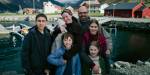
The film "Fjord" tells the story of a Norwegian Romanian family whose children are taken into care following suspicions of violence. It has faced criticism from cultural commentators (aftenposten.no) and child welfare professionals (fontene.no), who argue that it presents an inaccurate picture of the child welfare system.
“On the contrary, I think it is an important film,” says Aamodt.
“It raises a wide range of general issues that we recognise from our research, professional practice and inspection reports,” says Olkowska.
They enter the most private sphere people have: the family. Research shows that such interventions can be extremely distressing for children and, in some cases, cause trauma and harm,.– Alicja Olkowska
Not in the child’s best interests
In the film, all five children are placed in emergency care outside their home. The two researchers emphasise that interventions of this kind are not always in the children’s best interests
“They enter the most private sphere people have: the family. Research shows that such interventions can be extremely distressing for children and, in some cases, cause trauma and harm,” says Olkowska.
In addition to grieving the loss of their family, many children experience feelings of guilt.
“We talk a lot about listening to children and taking them seriously. But perhaps we do not always recognise the responsibility we place on young children when their accounts have such far-reaching consequences,” says Aamodt.
“We are not just creating responsible children, but also children who feel guilty and remorseful,” she argues.
Aamodt also points out that research shows that removing children from their parents’ care can damage relationships between children and adults, even after the children are returned to their families.
No room for professional judgement
The researchers point to a scene in the film in which a child welfare professional, asked how she can do this to a family, refers to the procedures she is required to follow.
"Our research seeks to show how things can go wrong when standardised tools overshadow the specific circumstances of a case. There is little room for professional judgement, and the individual caseworker’s assessments become irrelevant,” says Aamodt.
“We cannot place the responsibility solely on employees. Not following procedures carries risks for them as well. In that case, they are not doing the job they are expected to do,” says Olkowska.

Alicja Olkowska and Hilde A. Aamodt. Photo: Simen Øvergaard/NewsLab
Fear of making mistakes
The researchers argue that the zero-tolerance policy on violence is an example of a standardized approach that can sometimes have unintended consequences.
“If a child says, ‘Mum hits me’, standardised procedures are triggered, leading to extensive investigations and, in some cases, emergency placement.
“This is often driven by a fear of making mistakes and failing to recognise that a child needs help. But it can lead to decisions being made too quickly. The risks of not intervening are given greater weight than the potential consequences of intervening,” says Olkowska.
Parents’ grief must be taken seriously
The researchers also argue that parents’ grief after losing custody of their children deserves greater recognition.
“Grief can be expressed in many ways, and parents who lose custody of their children often react with anger and may appear aggressive. We see this in "Fjord" as well,” says Olkowska.
“The problem is that these reactions are often interpreted as confirmation of the concerns that have already been raised. We need to be aware of that,” says Aamodt.
Exclusion and stigmatisation
In the film, the parents are excluded from their local community after losing custody of their children. Aamodt and Olkowska recognise this pattern from their research.
“When your children are taken away, you lose more than just your role as a parent. You may also lose your social network, relationships, and the sense of belonging. It is a very serious social taboo,” says Aamodt.
She notes that people who lose a child through death, usually receive a great deal of support.
“But who do you talk to if your child is taken away from you? Who can you turn to for support?”
Aamodt believes that most people assume something seriously wrong must have happened when parents lose custody of their children, a perception also reflected in "Fjord".
“But we must remember that care orders are not always about violence or abuse. They may involve complex and multifaceted challenges. And we must also be willing to consider that mistakes can be made.”
As long as we cling to the belief that everything we do is automatically in the child’s best interests, it becomes very difficult to learn from our mistakes.– Hilde A. Aamodt
Criticism is often met with resistance
The researchers hope «Fjord» can contribute to a discussion about child welfare practices.
“The film tells us something troubling about our society and the Norwegian child welfare system. That is why we should explore what it has to say rather than simply dismiss it,” says Aamodt.
She has also researched how the child welfare system responds to criticism and argues that criticism is often met with resistance. She believes one reason is that criticism is frequently too general, making it easy to dismiss.
“We need criticism, but for it to have an impact and lead to change, it must address specific practices.”
Learning from mistakes
The researchers have noted that many child welfare professionals do not recognise the system portrayed in the film.
“That may be true, but that is not the important point. What matters is examining the cases where things go wrong. Only then can the child welfare system become one that we can trust,” says Aamodt.
“If we do not stop and examine the cases where mistakes have been made, we will not be able to change anything,” says Olkowska.
“As long as we cling to the belief that everything we do is automatically in the child’s best interests, it becomes very difficult to learn from our mistakes,” Aamodt concludes.
References
- Aamodt, H. A. and Olkowska, A. (2026). Child Welfare Services’ Assessments of the Best Interests of the Child from an Ethical Perspective (mdpi.com). Social Sciences
- Aamodt, H. A., and Olkowska, A. (2024). The practice of zero tolerance: emergency placement by child welfare services in Norway (bristoluniversitypressdigital.com). Critical and Radical Social Work.
- Aamodt, H. A. and Olkowska, A. (2023). "Og husk at vi ikke har mistet omsorgen for våre barn. Den er blitt tatt fra oss" – Om hvordan foreldre som har blitt fratatt omsorgen inkluderes og ekskluderes i samfunnet (rauli.cbs.dk). Dansk Sociologi.
- Aamodt, H. A. (2023). Kritikken av barnevernet: Kan vi forvente en endring av praksis? (scup.com). Nordic Journal of Wellbeing and Sustainable Welfare Development.
- Olkowska, A. and Aamodt, H. A. (2022). Om sorg ved omsorgsovertagelser. Sorgteori som en forståelsesramme for foreldrenes følelsesmessige reaksjoner etter å ha blitt fratatt omsorgen for sitt barn (scup.com). Tidsskriftet Norges Barnevern.
- Aamodt, H. A. and Olkowska, A. (2022). «Det er som om det er naboens barn som er på besøk» – en diskursiv analyse av mødres følelsesmessige erfaringer med tilbakeføring etter en omsorgsovertakelse (scup.com). Tidsskrift for psykisk helsearbeid.