Over the last 20 years in Norway, different organisations and institutions, including the Ombudsman for Children (Barneombudet), have expressed concern for children and young people growing up in what in the Norwegian context is referred to as closed religious communities (lukka trossamfunn).
Findings published in a new report from NOVA at OsloMet suggest that these concerns are warranted:
"Our study shows that there is a need to discuss the situation of children growing up in these communities and whether current legislation and policies provide the protection they are entitled to," says researcher Ingrid Smette.
A segregated childhood
Smette, and her colleagues Anja Bredal and Kirsten Rinde, has investigated what it is like to grow up in what they refer to as Bible-literalist Christian congregations with sectarian traits.
The study adopts both a childhood perspective and a children's rights perspective. Its main finding is that childhood in these communities is characterized by social and worldview segregation, with family and church closely intertwined and strict boundaries maintained between the community and wider society.
Most of the informants experienced this arrangement as safe and predictable in early childhood. However, for most, it became more problematic as they entered youth.
"The religious community plays a crucial role in defining legitimate relationships, gender roles in the family, how to spend your time and money, what education to pursue," says Smette.
"In many ways, the church takes over roles and responsibilities otherwise left to parents. The parents' main task will be to ensure that the children remain in the faith and in the community."
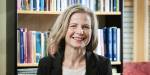
The research project was lead by Research Professor Ingrid Smette at NOVA. Photo: Stig Marlon Weston / OsloMet
According to Smette, children learn early on that the world outside the church is sinful and dangerous, as it is seen as being under Satan's influence and full of temptations. This creates a dualistic worldview characterized by sharp contradictions: inside and outside, pure and sinful, salvation and damnation.
Making the wrong choice can have serious consequences: not only disappointed parents, but eternal damnation.– Research Professor Ingrid Smette
Such a worldview leaves little room for impulses from the outside – and makes it difficult for children to develop their own perspectives.
It also makes close friendships with peers outside the congregation complicated, and often impossible, especially during adolescence. For those who attended public school, this has strongly influenced their experience of schooling.
Some of the informants had attended Christian private schools, some under the auspices of the church. They described a school day with fewer contradictions between school and church life, but also censorship and control of teaching materials.
Upbringing characterized by fear and guilt
Upbringing in these communities is not just about rules, but also about choices, and about making the right ones. For children, this means remaining within the church's teachings. Making the wrong choice can have serious consequences: not only disappointing one's parents but risking eternal damnation.
Obedience to God, the church, and parents is essential. These ideals contrast with those prevalent in wider society, where the emphasis is on raising children who think independently and critically. The goal is instead to form children who make the right choices and stay in the church.
An informant raised in a Laestadian congregation describes it as follows:
"Well, you have a choice. (…) “All human beings are created with free will”. So you have a choice. But you don't have a choice. Because there is one thing that is right. And if you don't choose that, you will burn forever in hell."
The informants report that as they grew older, they experienced considerable fear, both of the outside world and of hell. They also describe feelings of loneliness resulting from being unable to share doubts and other difficult thoughts with others.
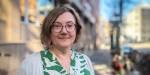
"Children have the right to be heard, to form their own opinions, and to develop autonomy," says Senior Researcher Anja Bredal. Photo: Silje Pileberg / OsloMet.
Childrearing ideals in these communities have changed over time. The researchers describe a shift from acceptance of physical punishment to what they term internal discipline, mirroring broader developments in childrearing practices. However, the participants describe forms of psychological control based on guilt, fear, and a troubled conscience, including fear of eternal damnation.
"'God sees everything' is a phrase many informants have grown up with – not only their actions, but also their thoughts," says Anja Bredal.
Children have the right to be heard, to form their own opinions, and to develop autonomy. The form of religious upbringing we have analysed in the report systematically compromises these rights.– Senior Researcher Anja Bredal
Risk of compromising children's rights
In the report, the researchers point out that this type of upbringing entails a risk of undermining children's rights, especially in two areas.
One relates to children's right to protection against violence and harm, as enshrined in the Constitution, the Children's Act and the UN Convention on the Rights of the Child.
The second area concerns children's right to participation and self-determination, freedom of religion and thought. Children have the right to be heard, to form their own opinions, and to develop autonomy.
"The form of religious upbringing we have analysed in the report systematically compromises these rights – in ways that may be in conflict with the Convention on the Rights of the Child and Norwegian law," says Smette.
"We recommend that these aspects of children's upbringing be given greater attention in public discussions about children's rights in religious communities that maintain strict boundaries between themselves and wider society."
About the study
Data: The study is based on interviews with 28 young adults who have grown up in Bible-literal Christian communities with sectarian traits. The informants had either left, or were in the process of leaving, the churches or congregation in which they had been brought up.
The project: Upbringing, Family Life, and Seeking Help in 'Closed' Religious Communities. Ingrid Smette is the project manager.
The report: Ingrid Smette, Anja Bredal og Kirsten Rinde (2025): En segregert barndom. Oppvekst i bokstavtro kristne trossamfunn i Norge. NOVA Rapport 10/25 (nva.sikt.no)
Financing: The Norwegian Directorate for Children, Youth and Family Affairs (Bufdir)