Show filter
-
The Nordic model in comparative perspective (SN4000)
-
Aesthetics of Materiality (MAPD5300)
-
Contemporary Research in Nordic Early Childhood Education and Care (PHUV9480)
-
Sustainable welfare policies in the making: Global challenges to the Nordic welfare model (SN4100)
-
Learning Model for Self-Determination - II
People with intellectual disability have lower levels of self-determination than others. In this project, we conduct a community-based intervention aimed at enhancing self-determination skills, such as setting goals and making decisions. -
The Barnahus Model: Developmental Trends and Institutional Tensions
Based on the Norwegian and international barnahus models, this project will explore how the barnahus model has developed and changed over time, as well as the institutional tensions that permeats the barnahus operation. -
Development of an organoid model for insight into testicular cancer
This project develops a 3D human fetal testis organoid model to study how testicular cancer begins and how risk genes and environmental factors act. -
Evaluation of Norwegian Barnahus
This project is a national evaluation of the Norwegian Barnahus model. -
DigiWork: Digital Prism and the Nordic Model of Workplace Democracy under Pressure
Big data and artificial intelligence are radically transforming the ways in which we work, are hired and fired, managed and led. This project investigates the effects of digital transformation of work on the Norwegian model of workplace democracy and tripartite collaboration. -
BRO: Roadmap for sustainable radical task sharing
The project will develop and test a new model for organizing municipal health and care services. -
 Large grant for research on autonomous searches
OsloMet researchers have received NOK 11.84 million for research into machine learning inspired by the eyes' search for visual information. -
 A holistic approach to supporting victimized children
Barnahus is an innovative model of caring for and supporting children who have been the victim of violence and sexual abuse. It provides a safe and supportive environment to meet their legal, medical, and psychological needs. -
Holistic follow‑up of low‑income families (the HOLF project)
The project will evaluate the effects of a new model developed by Nav to improve follow‑up services for low‑income families -
Teacher Education Schools in Vocational Teacher Education
Development of an organizational theoretical, didactic model for collaboration between educational institution and field of practice. -
Culture and leadership in the learning environment
The project explores how culture and leadership shape the learning environment for nursing students in specialist health services, aiming to develop a model for best practice. -
Reinventing Mainstream Classrooms (RE.MA.C.)
The project brings together native language students, migrant students and mainstream (language) teachers. -
Assessing the Impact and Sustainability of Dementia Villages: Nurturing Thriving in Dementia-Friendly Communities
The PhD project examines how Dementia Villages influence health outcomes, thriving, and quality of life for people with dementia, their informal caregivers, and staff. -
Complementary Pathways for Adult Refugees: The Role of VET, Skills and Qualifications
The aim of the project is to increase the evidence base which can support policy- and decision-making in EU MS in designing and implementing complementary pathway mechanisms for admission of adult refugees from a first host country to an EU country through use of VET, skills and qualifications. -
 Get to know OsloMet
Through the students we educate and the knowledge we produce, Norway's most urban university helps drive the welfare state forward. -
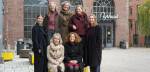 They receive OsloMet's research prize: “We are proud to have built a community of dedicated researchers”
For eleven years, the researchers behind The Domestic Violence Research Programme have worked to strengthen knowledge about violence in close relationships. The goal is to make the world a little better. -
 What will the clouds above us be like in the future?
Artificial intelligence can now be trained to predict what the cloud cover will look like when the climate changes. -
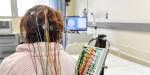 A simple brain test can detect early signs of Alzheimer’s
A routine brain test already available in many hospitals, combined with artificial intelligence, can detect early signs of Alzheimer’s disease — without needles or expensive brain scans. -
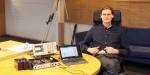 Measuring blood sugar without pricking your finger
Diabetic patients should be able to monitor blood sugar levels without pricking fingers. The students are trying to find a solution. -
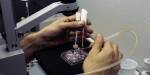 How artificial intelligence can revolutionise assisted fertilisation
AI could make assisted reproductive technology significantly more effective, but professionals are often sceptical. There is a need to build greater trust among them, says researcher. -
Improving practices together (IMPRATO)
We will explore and develop knowledge about collaboration aimed at promoting participation in physical education for children and young people. -
 Providing for the future: to use or not to use Norway’s oil and gas
How did a desire to preserve oil and gas for future generations and protect the environment turn into the largest sovereign wealth fund in the world and the foundation of the Norwegian welfare state? -
 How Machine Learning Uncovers Hidden Trends in Online Hate
A long term study of posts on Facebook and X in Norway shows that hate speech is growing, but much of the toxicity comes from a small group of users. -
 Oslo, the divided city
A deep socioeconomic divide splits Oslo from east to west. It will continue to deepen unless it is more widely acknowledged and addressed. -
Publications
A selection of the different publications from the Artificial Intelligence Lab. -
The Futures and Policy Lab
Policy Lab is OsloMet’s hub for futures-oriented critical thinking, development of futures methods and techniques, and research-driven experimentation and organizational development based on futures studies.
