Norwegian version

Faculty of Technology, Art and Design (TKD)

The Faculty of Technology, Art and Design offers higher education and research and development within technical subjects, arts and design.

Students
4535

2025 (Database for Statistics on Higher Education)

Bachelor's programmes
13

plus courses for one year and six-months, exchange students and further education

Master's programmes
8
PhD programmes
2

News

How we can get more out of future mobile networks

What could AI, new antenna systems and a better understanding of electromagnetic waves mean for the future of communications? Three leading international experts presented current research at OsloMet.

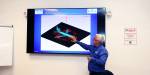
Levent Sevgi shows a picture of an airplane.
Good digital design should work for everyone

Visiting researcher Wanwisa Wannapipat from Thailand is spending time at OsloMet to explore universal design, digital learning and how technology can better serve older people and other users with different needs.

Portrait of Wanwisa Wannapipat
Joining forces for the green transition

The Industrial Revolution drove a level of resource consumption that cannot continue. OsloMet aims to build a powerhouse for green transition that brings together academic communities, students and external partners.

Portrait of Arvind Keprate
Won award for breakthrough heat pump study

An OsloMet-led research team has won an Innovative Technology Recognition Award demonstrating how multiple propane air-to-water heat pumps operating in cascade can deliver continuous, energy-efficient heating in Nordic winters.

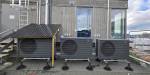
Three heat pumps next to each other outdoors.
Nordes 2025: Relational Design – New Directions for Design Research

Oslo became the hub of international design research as OsloMet – Oslo Metropolitan University, the Oslo School of Architecture and Design (AHO) and the University of Oslo (UiO), hosted the 11th Nordes Conference in August.

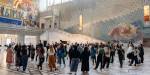
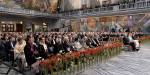
The participants at the opening of the conference in Oslo City Hall.
Can the 15-minute city work for young people?

Young people are often overlooked in urban planning, but the European research project HANGOUT seeks to explore how they can play a more central role.

Girl from behind on a busy street with a crosswalk. We can see a scooter in motion and a sidewalk with people in the background.
Three people walks down a street.
Uneven steps strain the brain

How do our brains make sense out of all the sight, sound, and touch information coming in and turn it into smooth motion like standing and walking?

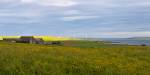
Green field with wildflowers and wind turbines furthest to the seashore. We see the houses on a farm to the left.
When energy infrastructure becomes a neighbour

On the windswept Orkney Islands, there are over 900 wind turbines, some very close to where people live. How does that affect everyday life?

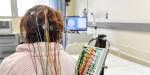
EEG electrodes attached to the back of a woman's head. Hospital environment in the background.
A simple brain test can detect early signs of Alzheimer’s

A routine brain test already available in many hospitals, combined with artificial intelligence, can detect early signs of Alzheimer’s disease — without needles or expensive brain scans.

Dancer bend backwards with smoke around her body, and a field of light illuminating the smoke in the air.
Few have seen how turbulence unfolds. Now you can see it through smoke, light and dance.

A dance performance that makes turbulence visible can show us that it is present in all aspects of life – and is useful, open to influence and something we can live with.

Portait of Claire, Kyle and Sami by Pilestredet street in Oslo. OsloMet builing in the background.
How students from a small Louisiana town experience Oslo

After two months in Oslo, three students from Louisiana Tech University share their experiences with studying, Norwegian culture, and life in a larger city.

A packed hall at the Peace Prize ceremony. We can see the "Occupation Frieze" on the right.
Have you noticed the mural behind the Nobel Peace Prize ceremony in Oslo City Hall?

Researchers have been granted access to private letters, photographs and sketches that reveal the dramatic story of the artist and the Occupation Frieze in Oslo City Hall.

Portrait of Leila Mozaffari
Where students become entrepreneurs

Gründergarasjen at OsloMet provides a unique environment where engineering and computer science students can transform their ideas into real start-ups.

Tawfique is sitting in the VEAS control room. Many computer screens show technical measurements in the sewage plant. Tawfique smiles at us.
How Tawfique aims to enhance the production of biogas

Master's student Tawfique is interested in how control engineering can be utilised within renewable energy., and explores this in Norway's largest wastewater treatment plant.

Hands holding test tubes under microscope.
How artificial intelligence can revolutionise assisted fertilisation

AI could make assisted reproductive technology significantly more effective, but professionals are often sceptical. There is a need to build greater trust among them, says researcher.