Show filter
-
The Nordic model in comparative perspective (SN4000)
-
Aesthetics of Materiality (MAPD5300)
-
Contemporary Research in Nordic Early Childhood Education and Care (PHUV9480)
-
Sustainable welfare policies in the making: Global challenges to the Nordic welfare model (SN4100)
-
Learning Model for Self-Determination - II
People with intellectual disability have lower levels of self-determination than others. In this project, we conduct a community-based intervention aimed at enhancing self-determination skills, such as setting goals and making decisions. -
The Barnahus Model: Developmental Trends and Institutional Tensions
Based on the Norwegian and international barnahus models, this project will explore how the barnahus model has developed and changed over time, as well as the institutional tensions that permeats the barnahus operation. -
Development of an organoid model for insight into testicular cancer
This project develops a 3D human fetal testis organoid model to study how testicular cancer begins and how risk genes and environmental factors act. -
DigiWork: Digital Prism and the Nordic Model of Workplace Democracy under Pressure
Big data and artificial intelligence are radically transforming the ways in which we work, are hired and fired, managed and led. This project investigates the effects of digital transformation of work on the Norwegian model of workplace democracy and tripartite collaboration. -
Evaluation of Norwegian Barnahus
This project is a national evaluation of the Norwegian Barnahus model. -
BRO: Roadmap for sustainable radical task sharing
The project will develop and test a new model for organizing municipal health and care services. -
 Large grant for research on autonomous searches
OsloMet researchers have received NOK 11.84 million for research into machine learning inspired by the eyes' search for visual information. -
 A holistic approach to supporting victimized children
Barnahus is an innovative model of caring for and supporting children who have been the victim of violence and sexual abuse. It provides a safe and supportive environment to meet their legal, medical, and psychological needs. -
Holistic follow‑up of low‑income families (the HOLF project)
The project will evaluate the effects of a new model developed by Nav to improve follow‑up services for low‑income families -
Teacher Education Schools in Vocational Teacher Education
Development of an organizational theoretical, didactic model for collaboration between educational institution and field of practice. -
Culture and leadership in the learning environment
The project explores how culture and leadership shape the learning environment for nursing students in specialist health services, aiming to develop a model for best practice. -
Reinventing Mainstream Classrooms (RE.MA.C.)
The project brings together native language students, migrant students and mainstream (language) teachers. -
Assessing the Impact and Sustainability of Dementia Villages: Nurturing Thriving in Dementia-Friendly Communities
The PhD project examines how Dementia Villages influence health outcomes, thriving, and quality of life for people with dementia, their informal caregivers, and staff. -
Complementary Pathways for Adult Refugees: The Role of VET, Skills and Qualifications
The aim of the project is to increase the evidence base which can support policy- and decision-making in EU MS in designing and implementing complementary pathway mechanisms for admission of adult refugees from a first host country to an EU country through use of VET, skills and qualifications. -
 Get to know OsloMet
Through the students we educate and the knowledge we produce, Norway's most urban university helps drive the welfare state forward. -
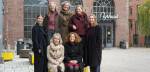 They receive OsloMet's research prize: “We are proud to have built a community of dedicated researchers”
For eleven years, the researchers behind The Domestic Violence Research Programme have worked to strengthen knowledge about violence in close relationships. The goal is to make the world a little better. -
 What will the clouds above us be like in the future?
Artificial intelligence can now be trained to predict what the cloud cover will look like when the climate changes. -
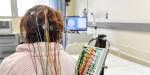 A simple brain test can detect early signs of Alzheimer’s
A routine brain test already available in many hospitals, combined with artificial intelligence, can detect early signs of Alzheimer’s disease — without needles or expensive brain scans. -
 Measuring blood sugar without pricking your finger
Diabetic patients should be able to monitor blood sugar levels without pricking fingers. The students are trying to find a solution. -
 How artificial intelligence can revolutionise assisted fertilisation
AI could make assisted reproductive technology significantly more effective, but professionals are often sceptical. There is a need to build greater trust among them, says researcher. -
Improving practices together (IMPRATO)
We will explore and develop knowledge about collaboration aimed at promoting participation in physical education for children and young people. -
 Providing for the future: to use or not to use Norway’s oil and gas
How did a desire to preserve oil and gas for future generations and protect the environment turn into the largest sovereign wealth fund in the world and the foundation of the Norwegian welfare state? -
 How Machine Learning Uncovers Hidden Trends in Online Hate
A long term study of posts on Facebook and X in Norway shows that hate speech is growing, but much of the toxicity comes from a small group of users. -
 Oslo, the divided city
A deep socioeconomic divide splits Oslo from east to west. It will continue to deepen unless it is more widely acknowledged and addressed. -
Publications
A selection of the different publications from the Artificial Intelligence Lab. -
Brands, Branding and Marketing: Communication Trends and Strategies (MEDK4400)
-
Brands, Branding and Marketing: Communication Trends and Strategies (MEDK4400)
-
HOUSYOUNG
How can we create sustainable and effective collaborative models for increased inclusion of youth with complex needs through measures including “own home” in the local community. -
 – We need to imagine a more sustainable future for Norway’s welfare state
If Norway wants its welfare state to support future generations, and today’s population, research says it will need to imagine its place in a more sustainable global system. -
Enhancing Integration through Practical Training
The project will foster better intercultural understanding and professional inclusion of students with language and networking challenges. -
 Extending product life yields a greater environmental impact than any other measure
Sustainable consumption should not be reduced to reuse and recycling, according to SIFO researchers. -
Strengthening solidarity for democratic unity across border (SOLIDEM)
The SOLIDEM project focuses on the weakening of trust and solidarity in European welfare states, including Norway. -
Research and development
The Department of Mechanical, Electrical, and Chemical Engineering prioritizes research in Mechanical Engineering, Robotics and Control, as well as Biomedical Engineering. -
 Master's Trick: “It was important to set everything else aside”
Anders Blomberg found a clever way to put his phone away. The result was the award for the best master’s thesis at OsloMet. -
Persistent Passion for Professional Education: Consequences for student completion and dropout (PERSIST)
The primary objective of this project is to examine dropout from higher education, with special focus on previously under-studied professional programmes. -
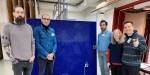 Trying to reduce damage to paintings
OsloMet and Munch Museum investigate how mechanical loads affect porous canvas paintings during transport of Munch's paintings. -
 Conditions for including vulnerable individuals in our labor market are not good
However, increased use of workplace mentors is showing promising results. Øystein Spjelkavik’s research has led to changes in NAV’s practices. -
Improving trust-based management in Nordic urban governance and management education
This project explores how ongoing management reforms are conceptualised and put into practice in two Nordic cities. -
Circles of care – Family caregivers’ experiences with recurrent nursing home admissions for relatives living with dementia
The project explores family caregivers’ experiences with repeated transitions between home and nursing homes for people with dementia, and how these affect caregiver burden, relationships, and care quality. -
Subjective discounting of delayed rewards
The project examines preference for immediate versus delayed rewards in animal models and in humans to identify variables that control choice. -
 Can the 15-minute city work for young people?
Young people are often overlooked in urban planning, but the European research project HANGOUT seeks to explore how they can play a more central role. -
 Local government was key to managing the pandemic
A major Nordic study shows that local authorities played a crucial role in handling COVID-19 – and why trust and flexibility are key to surviving future crises. -
Dementia Villages – providing better and safer person-centred care to people with dementia
The project explores how the physical environment of Dementia Villages influences healthcare personnel’s daily work, job satisfaction, and the quality of person-centred dementia care. -
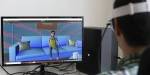 Using AI to improve investigative interviews with children
Researchers and experts in the field of interviewing children are using artificial intelligence to develop new training methods for the police and the Child Welfare Services. -
PhD projects in Engineering Science
Overview of PhD projects in Engineering Science with name of the PhD student, working title of the project and name of the main supervisor. -
.jpg) Should rivers be granted the same rights as humans?
Should rivers be granted the same rights as humans?Axel Borchgrevink is busy investigating what happens when rivers are granted the same rights as humans. -
Coordinated Online Panels for Research on Democracy and Governance in Norway (KODEM)
KODEM allows researchers to ask questions to four societal groups relevant to research on democracy and governance in Norway. -
Making Persons with Disabilities Full Citizens (DISCIT)
DISCIT aims to produce new knowledge enabling Member States, affiliated European countries and the European Union to achieve full and effective participation of persons with disabilities in society and economy. -
 Innovating together: Win-win partnerships between startups and corporates
Researchers have followed startups as they meet large companies and found two main paths to success and three common pathbreakers. -
AI-driven patient avatar for physiotherapy education
The project will develop an AI-based patient avatar that allows physiotherapy students to practice professional communication skills early in their studies. -
Vocational Education and Training in Transformation (FYKE)
The group works on projects related to continuous changes in professions, work and education. -
Teaching and Learning in Higher Education (UHPED)
-
Disability and Disease during the 1918 Influenza Pandemic: Implications for Preparedness Policies
A global influenza pandemic is imminent and public health preparedness plans that address the needs of vulnerable populations are indispensable. -
Crosscare-Old: A Cross Sectoral Approach to High Quality Healthcare Transitions for Older People
The project aims to increase the understanding of the role of cross-sectoral factors that constitute barriers for high quality care transitions for older people from hospital to municipal care. -
Strategy, Innovation and Marketing
The department of Strategy, Innovation, and Marketing (SIM) is responsible for teaching strategy, innovation, entrepreneurship, marketing, intercultural communication and business English at Oslo Business School. -
 No pedagogical reasons to continue offering hybrid teaching
Combining remote and in-person teaching demands more preparation from both teachers and students. It also results in poorer learning outcomes.
