Show filter
-
Leadership (ØAADM3400)
-
Investments (ØABED4600)
-
Follow the Money: Journalism, data and accountability (JB3370)
-
Advanced microeconomics (ØASØK4100)
-
The Economics of Banking (ØABED2300)
-
 Is your kitchen clean enough?
Every year, 5,000 Europeans die from diseases contracted from food. Researchers visited people’s homes and discovered both good and bad kitchen habits in different European countries. -
Émile Durkheim and modern working life
The project examines the contemporary relevance of Durkheim’s work for today’s working life. -
 Experimental kitchen studies from all over Europe
How do European consumers perceive the quality of the food they eat? Join us in exploring the thoughts and practices of 40 households from seven European countries. -
Universal basic income trials in modern welfare states: A knowledge review
Producing a state-of-the-art review of research on universal basic income experiments in modern welfare states. -
Research and development
Department of Built Environment participate in research groups in priority areas. -
 OsloMet AI Lab granted status of Excellent Academic Environment with NordSTAR
Nordic Centre for Sustainable and Trustworthy AI research (NordSTAR) will be OsloMets high quality academic environment in modern Artificial Intelligence. -
 Master's Trick: “It was important to set everything else aside”
Anders Blomberg found a clever way to put his phone away. The result was the award for the best master’s thesis at OsloMet. -
Cookies policy
By using oslomet.no you agree that we set necessary cookies in your browser. This policy applies to the main domain oslomet.no. -
NordSTAR (2021 - 2025)
NordSTAR is a Centre of Research Excellence in modern AI that aims to establish a new paradigm in AI basic research. -
 NordSTAR paper in ICES
A student project from Evolutionary AI and Robotics is set to be presented and published as a conference paper -
 International inclusion from day one
Through a comprehensive onboarding programme and departmental social activities, new international employees at OsloMet are made to feel welcome the moment they set foot on campus. -
Unpacking the Modern Working Class: Life Chances, Social Cohesion and Recognition in an Age of Migration
The project raises four crucial question that seek to describe the contemporary working class, its political orientation, lived experience and their media representations -
Work, Health, and Inequality: Challenges in the Norwegian Labor Market
Work is a cornerstone of modern life, offering material and social benefits that enhance quality of life and health. However, many workers still face adverse working conditions that can potentially harm their health and well-being. -
28 OctoberSeminar with Professor Pierre Côté: Applying large registry data to inform effective health care
-
How does welfare conditionality affect political participation?
-
 Young people may face particular challenges in the post-Corona labour market
The coronavirus pandemic has resulted in both a global health crisis and a financial crisis on a scale never before seen in modern times. The labour market that emerges in the wake of the crisis may impact younger workers harder than others. -
Digital & Sustainable Construction (DiSCo)
This research group will create and advance knowledge to meet challenges of digitalization and sustainability. -
 Oslo in the summertime
The sun doesn't set until close to midnight, and even then it never really gets dark. You can spend the evening watching the light change at an outdoor café with friends, or go for a relaxing swim in the fjord alone. Oslo in the summer is a pretty magical place. -
Complementary Pathways for Adult Refugees: The Role of VET, Skills and Qualifications
The aim of the project is to increase the evidence base which can support policy- and decision-making in EU MS in designing and implementing complementary pathway mechanisms for admission of adult refugees from a first host country to an EU country through use of VET, skills and qualifications. -
 Where to live in Oslo: your guide to the best student housing
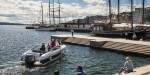
As an international student, one of the most important decisions you make before coming to Norway is where to live—a choice that will have a significant impact on your experience in Oslo. -
STATECORP
-
SafeConsume
The objective of SafeConsume is to reduce health burden from foodborne illnesses. -
 Why is it so challenging to distribute COVID-19 information to the elderly in Norway?
People consume information in different ways. Catering to the needs and habits of the majority when conveying information can amount to discrimination against other groups—including the elderly. -
Photojournalism and News – Theory and Methods (FOTO1200)
-
 Reference Budget for Consumer Expenditures
The Reference Budget estimates ordinary consumer expenditures for different types of households. -
 OsloMet's strategy
The strategy will give direction for Oslo Metropolitan University towards 2050. Oslo Metropolitan University develops knowledge to solve societal challenges. -
 Fear of failure hinders creativity
“Making mistakes helps us learn and improve, and it is by making mistakes that we discover new ideas,” says OsloMet professor Ingeborg Stana. -
 The rise of digital housekeeping: the hidden work of smart technology
Researchers have studied a somewhat overlooked aspect of our household chores: digital housekeeping. -
Epigenetic regulation by Atlantic salmon miRNAs in disease and osmotic stress
This project aims to provide new knowledge on Atlantic salmon miRNAs as regulators of immune responses to other pathogens as well as stress related to sea water transfer. -
 From PhD candidate to full-time faculty member
Marco Tagliabue arrived in Oslo from Italy in February of 2015 armed with just two suitcases and an ambition to pursue his doctoral studies. Then he never left. -
 How Tawfique aims to enhance the production of biogas
Master's student Tawfique is interested in how control engineering can be utilised within renewable energy., and explores this in Norway's largest wastewater treatment plant. -
 How do we imagine a sustainable future?
How will people live their lives in 30 years? Now you can share your thoughts about the future with researchers. -
 Norway’s hidden gender inequality
Norway is a gender equal and diverse country, but disparities in parenting roles persist with detrimental economic implications. -
 When energy infrastructure becomes a neighbour
On the windswept Orkney Islands, there are over 900 wind turbines, some very close to where people live. How does that affect everyday life? -
Understanding citizens' street-level encounters with the welfare state (SN4200)
-
Research and development
-
 What will the clouds above us be like in the future?
Artificial intelligence can now be trained to predict what the cloud cover will look like when the climate changes. -
 In pursuit of plastic-eating bacteria
In a world drowning in plastic, plastic-eating bacteria may offer solutions to the deluge. Professor Colin Charnock has discovered novel ways to find and culture these types of bacteria. -
Monitoring, Activity- and Movement Analysis (HETEK4200)
-
Semester programme in Teacher Education in Design, Arts and Crafts for Years 1- 13 (30 ECTS)
-
Learning Model for Self-Determination - II
People with intellectual disability have lower levels of self-determination than others. In this project, we conduct a community-based intervention aimed at enhancing self-determination skills, such as setting goals and making decisions. -
Knowledge Strategy in a Digital Economy (ØAADM4400)
-
The Middle East: History, Society and Islam (UTVB3141)
-
Network for Health Literacy Research
This network is a collaborative platform at the Faculty of Health Sciences with the aim of strengthening and advancing research in health literacy at Oslo Metropolitan University. -
Evaluation of Stikkontakten Gamingsenter
This research project aims to evaluate the initiative Stikkontakten Gamingsenter. -
 Investigative journalists may rely more on artificial intelligence in the future
During the Panama Papers leak, journalists made use of machine learning to organise data. A new research project will explore how such methods can be employed in investigative journalism. -
Clinical interventions and assistive technology (CAT group)
The research group focus on understanding challenges associated with mobility, functioning and psychosocial aspects of living with a prosthesis or orthosis. -
 How to make AI we can trust
Artificial intelligence offers great promise, but suffers from a trust deficit. Researchers at OsloMet are seeking to make this technology more trustworthy and, ultimately, more sustainable. -
 Introduction to the Master’s programme in Applied Computer and Information Technology
OsloMet offers a Master’s programme in Applied Computer and Information Technology (ACIT), with no fewer than eight specialisations. -
Critical Engagements: Social Sciences in a Changing Society
-
Global environmental studies in Costa Rica (in collaboration with Kulturstudier)
-
Investigative journalism with AI
-
CEOs Personal Risk Attitudes and Corporate Financing and Investment
This project studies to what extent firm policies are affected by managers’ personal assets allocation, asset allocation, and founders' opportunity cost. -
Reconnect: Regulated Occupations: Mobility, Qualification and Labour Market Outcomes
RECONNECT provides new knowledge on the consequences of occupational regulation for labor mobility and immigrants’ opportunity to integrate with their occupation of training. -
 Centre for Research on Pandemics & Society (PANSOC)
An OsloMet Centre of Research Excellence (CRE) studying the societal aspects of pandemics.
