Show filter
-
 Is your kitchen clean enough?
Every year, 5,000 Europeans die from diseases contracted from food. Researchers visited people’s homes and discovered both good and bad kitchen habits in different European countries. -
 Experimental kitchen studies from all over Europe
How do European consumers perceive the quality of the food they eat? Join us in exploring the thoughts and practices of 40 households from seven European countries. -
 We do not know enough about the digital everyday lives of children and young people
Halla B. Holmarsdottir is investigating how technology affects the lives of children and young people. -
 Master's Trick: “It was important to set everything else aside”
Anders Blomberg found a clever way to put his phone away. The result was the award for the best master’s thesis at OsloMet. -
 Guro Ødegård is the new director at NOVA
Guro Ødegård takes over as the new director at NOVA, OsloMet, after Iver B. Neumann. Ødegård will function in the position until the Board has named the new director in June 2020. -
Cookies policy
By using oslomet.no you agree that we set necessary cookies in your browser. This policy applies to the main domain oslomet.no. -
Transnational Protection of Children at Risk in Non-convention Countries
This Ph.D. project focuses on cases where children have their habitual residence in Norway while being at risk in a country which has not ratified the Hague Convention for the protection of Children of 1996. -
 International inclusion from day one
Through a comprehensive onboarding programme and departmental social activities, new international employees at OsloMet are made to feel welcome the moment they set foot on campus. -
 NordSTAR paper in ICES
A student project from Evolutionary AI and Robotics is set to be presented and published as a conference paper -
Housing as a Welfare Good for Young NEETs
This project explores how housing conditions affect young people who are neither in education, employment, nor training (NEETs) in Oslo. -
Digital & Sustainable Construction (DiSCo)
This research group will create and advance knowledge to meet challenges of digitalization and sustainability. -
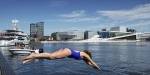 Oslo in the summertime
The sun doesn't set until close to midnight, and even then it never really gets dark. You can spend the evening watching the light change at an outdoor café with friends, or go for a relaxing swim in the fjord alone. Oslo in the summer is a pretty magical place. -
Complementary Pathways for Adult Refugees: The Role of VET, Skills and Qualifications
The aim of the project is to increase the evidence base which can support policy- and decision-making in EU MS in designing and implementing complementary pathway mechanisms for admission of adult refugees from a first host country to an EU country through use of VET, skills and qualifications. -
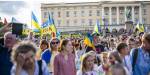 Only 1 in 10 Ukrainians want to return
Very few Ukrainian refugees say they want to return to Ukraine when the war ends. Half of them wish to stay in Norway permanently. -
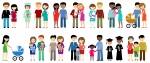 Reference Budget for Consumer Expenditures
The Reference Budget estimates ordinary consumer expenditures for different types of households. -
Admission to international master's degree programmes
How to apply for international master's degree programmes. -
SafeConsume
The objective of SafeConsume is to reduce health burden from foodborne illnesses. -
 What motivates Ukrainian refugees to return?
Researchers from NIBR will in a new project examine what might motivate Ukrainian refugees to return. -
 Student at Kjeller? Get to know the local area
Lillestrøm is just a short drive away from Kjeller campus, and here you have access to most of what you need when you are done for the day. -
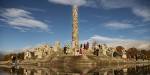 Moving to Norway
Are you thinking of moving to Norway to join OsloMet? We have one campus in the city centre of Oslo and one right outside of Oslo. -
Photojournalism and News – Theory and Methods (FOTO1200)
-
 The rise of digital housekeeping: the hidden work of smart technology
Researchers have studied a somewhat overlooked aspect of our household chores: digital housekeeping. -
Regulating migration and membership through monetary requirements (REMIMO)
In this research project, the researchers will take a closer look at how time and money affect immigration and integration in Norway in different ways. -
 Relinking the weak link. Building resilient digital households through interdisciplinary and multilevel exploration and intervention
What roles do socio-technical practices and infrastructures play in shaping security risks in technologies of the home and what tools and interventions can be developed to enable digitally resilient households? -
 How do we imagine a sustainable future?
How will people live their lives in 30 years? Now you can share your thoughts about the future with researchers. -
Active Ageing – Pathways and Outcomes (AgePaths)
This project investigates pathways and outcomes of active ageing in three domains and their interactions: the labor market, civil society, and the family. -
Visible Children – Professional Discretion in Child Custody Disputes in Court
The project examines the professional discretion of judges and experts in district courts when parents disagree on custodial issues; where the child should live, contact, and/or parental responsibility. -
 Norway is lovely, so why are people leaving?
The people who leave can have as much impact on a country as those who come in. Yet not much is known about Norway's 30,000 annual emigrants. -
Understanding citizens' street-level encounters with the welfare state (SN4200)
-
 How do political parties stop hate speech on Facebook?
A study shows that political parties tend to hide hate speech on Facebook rather than deleting it. This is unfortunate, according to journalism professor Karoline Andrea Ihlbæk. -
 What will the clouds above us be like in the future?
Artificial intelligence can now be trained to predict what the cloud cover will look like when the climate changes. -
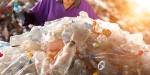 In pursuit of plastic-eating bacteria
In a world drowning in plastic, plastic-eating bacteria may offer solutions to the deluge. Professor Colin Charnock has discovered novel ways to find and culture these types of bacteria. -
 Providing for the future: to use or not to use Norway’s oil and gas
How did a desire to preserve oil and gas for future generations and protect the environment turn into the largest sovereign wealth fund in the world and the foundation of the Norwegian welfare state? -
Learning Model for Self-Determination - II
People with intellectual disability have lower levels of self-determination than others. In this project, we conduct a community-based intervention aimed at enhancing self-determination skills, such as setting goals and making decisions. -
Department of Product Design
The department offers bachelor's and master's degree programmes in product design. -
Semester programme in Teacher Education in Design, Arts and Crafts for Years 1- 13 (30 ECTS)
-
Children in Custody Disputes: Interdisciplinary Perspectives on Children's Rights, Parenting and Professional Discretion (Barn-i-Tvist)
The project aims to develop knowledge about the situation of children involved in high-conflict custody disputes. -
Engineering Science
-
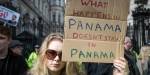 Investigative journalists may rely more on artificial intelligence in the future
During the Panama Papers leak, journalists made use of machine learning to organise data. A new research project will explore how such methods can be employed in investigative journalism. -
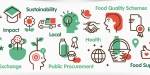 Strength2Food: Food quality for sustainability and health
Strength2Food assesses the impacts, exchanges knowledge, and informs policy making on sustainable food chains. -
Scholars at Risk-program at Oslo Metropolitan University
Oslo Metropolitan University is a member of the international network Scholars at Risk (SAR) whose main goal is to protect threatened scholars and promote academic freedom. -
07 OctoberGuest Lecture with Paulo Cruz Terra: Class, Gender, Race, and Sexuality in Brazilian Labour History
-
Publications
A selection of the different publications from the Artificial Intelligence Lab. -
 Cristina Valenti: I chose research training because I was curious about what it's like to work in a research team
"My ambition is to immerse myself in research within eco-social welfare or projects that focus on society's sustainability," says master's student Cristina Valenti. -
Qualification and Social Inclusion in Upper Secondary Vocational Education and Training (SAFETY-VET)
The main objective of the project is to generate knowledge about factors of importance for attainment in and completion of upper secondary VET among student groups with a potential risk of non-completion or drop out. We also study the importance of gender-segregated educational choices and young people's educational and occupational aspirations. -
CEOs Personal Risk Attitudes and Corporate Financing and Investment
This project studies to what extent firm policies are affected by managers’ personal assets allocation, asset allocation, and founders' opportunity cost. -
 Applying for a job at OsloMet
Are you looking for an international career? -
Critical Engagements: Social Sciences in a Changing Society
-
 Norway leading in digitalization, but not everyone is benefitting
Digitizing government welfare services is supposed to help make services more accessible to everyone. Are they unintentionally leaving people behind? -
Selected publications by Digital Journalism
This is an overview of selected publications by the Digital Journalism research group. -
 Stroke: Digital tools can provide equally effective rehabilitation at home
This paves the way for a more flexible future for patients. -
Innovation for Sustainability
-
Participation in Sports among Norwegian Youth
The aim of the research project is to gain new knowledge about the social position and status of sport participation among young people in Norway. -
MaxBiogas project
OsloMet and Veas collaborate to develop digital technologies that can make biogas production more energy-efficient and minimize environmental impact, and increase digital competence in the water industry. -
Quantum Hub publications and media
The Quantum Hub's most important publications and dissemination activities. -
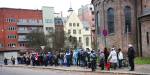 Slipping through the safety net
Norway and many other European countries have robust social safety nets. Yet they continue to fail their poorest citizens. -
 Youth Participated in Research: "It Changed My Life"
What fosters social inclusion? Researchers involved youth across Europe in the research itself. -
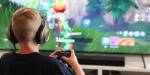 Buying popularity: how children are influenced by in-game spending
Kids risk being bullied or isolated if they don’t spend money on skins or equipment. Researchers have mapped how young people get manipulated into spending money while gaming. -
Voluntary membership in the Norwegian Public Service Pension Fund (SPK)
SPK is the Norwegian Public Service Pension Fund and Norway’s main provider of public occupational pensions. As a general rule, Norwegian citizens who reside and work in Norway are members of the Norwegian National Insurance Scheme, and those employed by OsloMet are also members of the Government Pension Fund (SPK). -
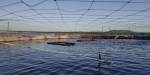 The tiny secret to healthier fish
OsloMet professor believes that the key to developing healthy and sustainable salmon aquaculture is in understanding their micro-RNA. -
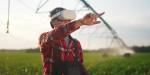 Imagining tomorrow: How fiction shapes our vision of a sustainable future
Technology in one form or another is part of all our ideas about the future. However, there are also alternative ways to envision life in 30 years. -
OsloMet Holmlia
OsloMet is located in the Søndre Nordstrand district and features an interdisciplinary, project-based campus. -
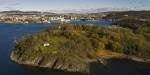 Student-friendly ways to enjoy autumn in Oslo
Whether you’re a returning student or are brand new to Oslo, autumn is a great time to explore the city. -
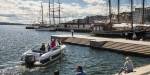 Where to live in Oslo: your guide to the best student housing
As an international student, one of the most important decisions you make before coming to Norway is where to live—a choice that will have a significant impact on your experience in Oslo. -
Department of Finance
The Department of Finance is primarily responsible for payroll, procurement, accounting, financial management, and business management. -
Frequently asked questions about master's admission
If you are applying to one of our international master's degrees, you might find answers to some of your questions in our frequently asked questions. -
 Publications
Selected publications from Centre for Youth and Life Course Research (TRACE). -
Discrimination of Muslims in the Labour Market
The topic of this project is the discrimination of Muslims in the labour market. -
21 SeptemberConversation analysis and the «failure» of patient-centred care
-
Coping with Flexibility. Behavioral Adaptations to the New Pension System and their Consequences in a Lifetime Perspective
The aim of this project is to study how people adapt to the reformed pension system. In particular, we look at adaptations to the increasing flexibility offered – both in terms of savings, and in terms of job planning and ways of combining work and pension uptake. -
 The light in the North is really beautiful
What's the best way to spend a summer evening in Oslo? Andrew from Spain shares some of his favourite things to do outdoors during the months when it never really gets dark. -
Experimental Studies of Complex Human Behavior
Stimulus equivalence is a behavioral analytic approach where one studies what is characterized as cognitive skills. -
English proficiency requirements for master's
If you are applying to an international master's degree, you have to document your English proficiency. -
A Multidimensional Approach to Social Exclusion in Later Life – Health Consequences for Ageing Populations (AMASE)
The overall aim of the project is to enhance research-based knowledge on the multidimensional nature of old age social exclusion and its consequences for health and to identify conditions that minimize social exclusion of disadvantaged groups. -
Caring for Children with Disabilities
The research project will investigate whether children with disabilities have their fundamental rights safeguarded in encounters with the health and care service. -
 In search of the ideal sperm cell
Can artificial intelligence increase the success rate of assisted reproduction technology? -
 How to prevent people from becoming radicalised
If we are serious about keeping people from radicalising and committing acts of terrorism, the work begins long before they become active on extremist websites. -
CONTEXT – Creating Integrated Person-centred Care in Different Settings
This project addresses how settings and contexts which enhance people-centred care can be created. -
Sound and vision: Documentary film and audio production (JB3340)
-
Organisation and Management
Research within the organization and management department spans across topics such as motivation and incentives, leader-member-relationships, organizational climate, virtual teams, health issues at work, gender and leadership, and work conditions for the self-employed. -
English as a Lingua Franca For Inclusive Multilingual Classrooms (ENRICH)
ENRICH aims at developing a high-quality Continuous Professional Development infrastructure. -
 Measuring blood sugar without pricking your finger
Diabetic patients should be able to monitor blood sugar levels without pricking fingers. The students are trying to find a solution. -
Qualify Unification in Europe for Shifting Trust. A Comparative Research on Muslims Responses to the Politics of Threat in France, UK, Spain, and Norway (QUEST)
What does it mean to ‘be Muslim’ in a polarized Europe? -
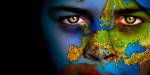 Europe move towards more restrictive, selective and temporary refugee policies
Over the past decade, European countries have grown more restrictive in whom they grant protection, and for how long that protection is granted. -
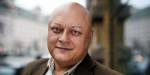 Jorge Jensen is appointed new director at SIFO
Jensen comes from the position of Director of Expertise at the Consumer Council of Norway. -
Abstracts
Abstracts for the conference "Tracing, shaping and reshaping culinary heritage" 5.-6. September 2022. -
 Make new friends and avoid feeling isolated using a tangible cup
Researchers at OsloMet have created a coffee cup that can make information technology more accessible to the elderly. The cup facilitates social contact and finding new online friends. -
 Elderly care during the pandemic: Norway and Denmark stand out
Norway and Denmark stand out among the European countries. Both countries had few deaths, both among the population as a whole and in elderly care institutions. -
 How artificial intelligence can help the visually impaired
Traditional navigation tools for the visually impaired are often impractical and require extensive training. Yet rapid advancements in artificial intelligence and the increasing computational capabilities of smartphones are opening new doors to enhance navigation assistance. -
How does welfare conditionality affect political participation?
-
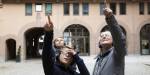 Creative practice – (trans)forming space, place and the environment
This is an interdisciplinary research group which explores and promotes creative and artistic engagements with space, place and the environment. -
Key Operation and Maintenance Strategies for Wind Farms
-
How does welfare conditionality affect political participation?
-
STATECORP
-
Single PhD courses in Engineering Science
-
New Pension System: Legitimacy, Behavioural Effects and Sustainability (PensjonsLAB)
A long-term research contract on the issues of old age pension and labour market activity among seniors financed by The Ministry of Labour and Social Affairs. -
COIL in Deaf Studies and Sign Language
Establish a basis for a sustainable system for a Collaborative Online International Learning (COIL) module in deaf studies and sign language. COIL can be described as virtual student and staff exchange as a strategic tool for internationalization of the curriculum. -
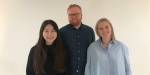 Solving future challenges with design
"Product design is exciting: You don’t have to stick with one thing, you work across disciplines and I think that’s the way everyone should work", says Nadiya. -
Patient specific functional scale to measure rehabilitation goals for patients with acquired brain injury
This project will investigate the Patient Specific Functional Scale (PSFS) as a measure to document and monitor patient-identified rehabilitation goals for patients with acquired brain injury (ABI). -
In-service training to improve the preschool classroom environment for children with special needs
The limited amount of training provided to staff in preschools poses a challenge in implementing evidence-based practices. -
Professional Careers and Labour Markets
A research group dedicated to studying the trajectories of professions in education and labour, and their degree of public trust. -
 Young people use cannabis in different ways – one group raises concern
Researchers categorize young cannabis users into four groups. For most, it's about curiosity, belonging, or exploring new youth identities. But for a few, usage is linked to loneliness and mental health challenges. -
 Innovating together: Win-win partnerships between startups and corporates
Researchers have followed startups as they meet large companies and found two main paths to success and three common pathbreakers. -
 Old age and happiness: some common misconceptions
Are older people more likely to feel loneliness? Will having children make you happier when you get old? And are old men really as irritable as we think? -
 You have many friends – so why do you feel so lonely?
It could be that you only have "catch-up friendships". According to researcher Marja Aartsen at OsloMet, this type of friendship has become relatively common. -
Making Persons with Disabilities Full Citizens (DISCIT)
DISCIT aims to produce new knowledge enabling Member States, affiliated European countries and the European Union to achieve full and effective participation of persons with disabilities in society and economy. -
EUROSHIP – Closing Gaps in Social Citizenship. New Tools to Foster Social Resilience in Europe
The overall aim of the EUROSHIP project is to provide an original and gender-sensitive assessment of the current gaps in social protection across Europe. -
 PATGOV: The governance of the European patent system
PATGOV is a research project funded by the Horizon 2020 Marie Sklodowska Curie Actions (MSCA) program. -
Social Impact Measurement for Civil Society Organizations (SIM4CSOs)
SIM4CSOs is an Erasmus + project that intends to empower the operation of non-profits within Civil Society by enhancing their effectiveness, transparency and governance through the application of social impact measurement methods. -
Søndre media
This project will empower youths to stay engaged in public expression and participation. -
Apply to a PhD program at the Faculty of Health Sciences
Read about the application process to the PhD programmes at the Faculty of Health Sciences. -
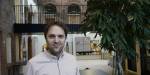 Predrag wanted to study something useful and relevant
Driven by a need to study something both relevant to current issues and beneficial to society, he chose the Master's Degree in International Development, Education and Sustainabilities at OsloMet. -
Staying on Track – completion in vocational education and training
A longitudinal interview study following vocational students with low grades from lower secondary education through upper secondary vocational education and training (VET). -
Problems with EndNote – tips and solutions
Is EndNote not working quite as it should? Here are some suggestions on how you can solve common errors and problems in EndNote. -
 Research
Our research at TRACE builds on more than two decades of sustained investment in longitudinal data collection, methodological development and scientific collaboration. -
Interpreter-mediated Communication as Part of the Education of Public Sector Professionals in Norway
PhD project exploring to what degree interpreting is a part of the education of Norway’s future nurses, police officers and social workers. -
Master’s Thesis Collaboration in Health and Technology
Gain access to new knowledge through master’s thesis projects at OsloMet. Help educate the workforce of the future and increase the visibility of your organization. -
Research and development at the Faculty of Education and International Studies
Research, development and innovation activities at the faculty are focused on contributing to society, to our target groups, and to our region. We contribute with relevant knowledge of high quality. -
 No pedagogical reasons to continue offering hybrid teaching
Combining remote and in-person teaching demands more preparation from both teachers and students. It also results in poorer learning outcomes. -
The Impact of Temporary Work Agencies on the Politics of Work
The Impact of Temporary Work Agencies on the Politics of Work is a research project funded by the Research Council of Norway under the Welfare, Working Life and Migration programme.
