Show filter
-
Introduction to Programming (PROG1000)
-
Introduction to the Development Enterprise (UTVB3003)
-
Introduction to Norwegian Kindergartens and Schools
-
Introduction to International Development, Education, and Sustainabilities (FLKM4110)
-
Research Methods 1 – Introduction to Quantitative and Qualitative Methodology (PSYK2100)
-
Sustainable welfare policies in the making: Global challenges to the Nordic welfare model (SN4100)
-
Business Analytics (ØABED2200)
-
Sustainable Business (ØAADM3600)
-
Themes in Library, Archives and Museums: An Exploration of Practice (BIBV3060)
-
Bacteriology and Antimicrobial Resistance (HETEK4300)
-
Sustainable Finance (ØABED3600)
-
Research Methods and Bachelor's Thesis in Radiography (RAB3900)
-
Master's Semester Programme in Geotechnical Engineering, autumn
-
Master's Semester Programme in Geotechnical Engineering, spring
-
Game theory (ØASØK2000)
-
Health Communication (MAVIT5100)
-
Business Decision-Making Using Data (ØAMET2200)
-
Python programming and data science for journalists
-
Norwegian Language for Foreign Students – Beginner Level A1, (NOBE6000)
-
Norwegian Language for Foreign Students – Intermediate Level A2, (NOIN6000)
-
Corporate Finance (ØABED3002)
-
Development Studies 1 in Vietnam (in collaboration with Kulturstudier)
-
Corporate Finance (ØABED4001)
-
Master Thesis Preparation Workshop - Quantitative Methods (SFV4800)
-
Media in War, Crisis and Conflict (MJ4401)
-
Research and Development in Biomedical Laboratory Science - Bachelor's Thesis (BIOB3900)
-
E-assessment (MAIKT-EA)
-
Geotechnical Engineering
-
Crash Course in Norwegian Language and Culture
-
Master's Semester Programme in Building Technology, autumn
-
Master's Semester Programme in Building Technology, spring
-
Digital media and culture (BIBV3040)
-
Civil Engineering
-
Philosophy of Science and Design Research (MAPD4000)
-
Public Health and Health Management (BIOB1050)
-
Building Technology
-
Environmental Economics (ØASØK4200)
-
Innovation within Healthcare (MAFAR4100)
-
Investigative Journalism and Cross Border Cooperation (MJ5100)
-
Product Design – Design in Complexity
-
Cross-Cultural Communication (ØAADM3300)
-
Investigative journalism with AI
-
Social Sciences
-
International Connections and International Sign among Deaf People (INTS6000)
-
Business English and Negotiations ØASPR2000)
-
Follow the Money: Journalism, data and accountability (JB3370)
-
Semester Programme in Behavior Analysis
-
Semester Programme in Radiography
-
Dynamic Project Leadership (BAPD3000)
-
Semester Programme in Health, Technology and Innovation
-
Knowledge and Misinformation: Teaching and Learning in a Digital Society (PHUV9510)
-
Management Control Systems (ØABED3400)
-
Advanced microeconomics (ØASØK4100)
-
Monitoring, Activity- and Movement Analysis (HETEK4200)
-
Structural Engineering
-
Valuation - Equity Research (ØABED4100)
-
Theories in Library and Information Science, PS9300 og PS9350
-
Strategic Analysis (ØAADM3100)
-
Fundamentals of PhD Supervision
-
Assessment and learning (PHUV9440)
-
Management Control Systems (ØABED4500)
-
Digital Cultural Heritage (MBIB4890)
-
Fundamental Concepts and Discourses in Business Administration, Innovation and Governance, PS9100
-
Single courses in Behavioural Science
-
Aesthetic sustainability in a critical perspective (BAPD2310)
-
Accessibility and Digital Communication
-
Behavioral Economics (MALKA220)
-
Information, Communication and Social Media (MOK2300)
-
Political Ecology of Education (PHUV9490)
-
Master's Semester Programme in Structural Engineering, autumn
-
Master's Semester Programme in Structural Engineering, spring
-
Transport Infrastructure Engineering
-
Technology and Design (MAPD5000)
-
Early Intervention for Children with Pervasive Developmental Disorders (MALKA217)
-
Physiotherapy for Health Conditions (FYB2210)
-
Entrepreneurial Mindset, Resilience, and Long-Term Success (ØAADM3820)
-
User Studies and Systems Evaluation (MBIB4840)
-
Safety of journalists, PS9500
-
Electronics and Biomedical Systems
-
Sustainable Design Approaches (MAPD4100)
-
Research Methods 3 – Research Designs and Statistics (PSYK2600)
-
Health Sciences
-
Presenting Arts-Based Research (PHUV9430)
-
Interactions in Health and Technology (HETEK4000)
-
Research ethics
-
Aesthetics of Materiality (MAPD5300)
-
Master’s Semester Programme in Mechanical Engineering, autumn
-
Master’s Semester Programme in Mechanical Engineering, spring
-
Bachelor’s Semester Programme in Mechanical Engineering, spring
-
System and Service Design
-
Bachelor’s Semester Programme in Mechanical Engineering, autumn
-
Semester Programme in Biomedical Laboratory Sciences
-
Design for Healthcare and Wellbeing
-
Semester Programme in Master of Aesthetic Practices in Society (30 ECTS)
-
Practice Oriented Systemic Design
-
Master's Semester Programme in Transport Infrastructure Engineering, autumn
-
Master's Semester Programme in Transport Infrastructure Engineering, spring
-
Cloud-based Services and Operations
-
Immigration Law (MINF6200)
-
Knowledge Production and the Global South (FLKM4210)
-
Sustainability and Outdoor education (MGSU3000)
-
Valuation for Accountants (REREV3100)
-
Master's Semester Programme in Smart Water Engineering, autumn
-
Visualizing Complexity (MAPD5210)
-
Academic Writing Course
-
Universal Design of ICT
-
Inclusion and Diversity (PHUV9470)
-
Social work in a global context (SOSV3220)
-
Distributed Collaborative Learning (MAIKT-DCL)
-
Puppet Theatre (DTV2200)
-
Teaching and Learning in Higher Education (UHPED)
-
Public Health Nutrition
-
Choices of Sustainability Transitions (UTVB2500)
-
Applied Artificial Intelligence
-
Web Publishing and Information Architecture (MOKV2400)
-
Prehospital Trauma Care – Clinical studies 1 (PARAPRA1)
-
Organizational Behavior and Leadership (BALH3000)
-
Semester Programme in Paramedic Science
-
Master’s Semester Programme in Transport and urban planning, spring
-
Master’s Semester Programme in Transport and urban planning, autumn
-
Discourses and Power (PHUV9340)
-
Digital Citizenship (MAIKT4300)
-
Behavior Analysis 1 – General Principles of Behavior Analysis (PSYK1420)
-
Media and Development (UTVB2400)
-
Mental Health of Migrants and Minorities (MAPSY4400)
-
Supervised Research Project in the Life Sciences (NVHIN)
-
Behavior Analysis 3 - Experimental and Conceptual Behavior Analysis (PSYK2310)
-
Semester Programme in Physiotherapy
-
Development and Migration (UTVB2100)
-
Econometrics (ØAMET4100)
-
Peace and conflict studies in Nepal and Sri Lanka (in collaboration with Kulturstudier)
-
Development Studies 2 in Ghana (in collaboration with Kulturstudier)
-
Data Visualisation (MOKV3500)
-
Leadership (ØAADM3400)
-
The Nordic model in comparative perspective (SN4000)
-
Science and the Media: Challenges for Journalism and Communication (MJ4300)
-
Fairytales and Creativity - Nordic Childhoods (BLH3250, BLH3330)
-
Design and Culture (MAPD4210)
-
Document Forensics (ARKV3100)
-
Master's Semester Programme in Smart Water Engineering, spring
-
Arts-Based Research Processes – An Introduction (PHUV9380)
-
Sound and vision: Documentary film and audio production (JB3340)
-
Risk Management (ØABED4300)
-
Practical Pedagogy for Tertiary Vocational Education 1
-
Theory of Science, Ethics and Research Methods (HETEK4100)
-
Advanced Computed Tomography Imaging and Digital Health Technology (RAB3110)
-
Rehabilitation in Physiotherapy I (FYB2500)
-
Aesthetics and Special Needs – Nordic Childhoods (BLH3310, BLH3320)
-
Robotics and Control
-
Photojournalism and News – Theory and Methods (FOTO1200)
-
The Publishing Game
-
Leadership in Practice (MSLV4500)
-
European Project Semester (EPS)
-
Global environmental studies in Costa Rica (in collaboration with Kulturstudier)
-
Climate Journalism, Theory and Practice (MJ5200)
-
Education and Religion in Development (UTVB2210)
-
Investments (ØABED4600)
-
Current Research in Library and Information Science, PBIB9300 or PBIB9350
-
Behavioural Economics (ØASØK4400)
-
Critical Reflection in Design Practice (BAPD3100)
-
Oral Storytelling as Artistic Research
-
Green conflicts and fact-checking: Journalism in the age of disinformation and environmental crisis (JB3380)
-
EU Law and Politics (BALV3500)
-
Professional Practice and Language Barriers (PHUV9410)
-
Machine learning for the analysis of physiotherapy records
The purpose of this project is to develop a framework for efficiently extracting data from physiotherapy records in private practice, to use this data in reporting and research. -
Research Semester in Pharmacy
-
Radiography, Clinical Practice (RABPRA3)
-
Applying Artificial Intelligence in Developing Personalized and Sustainable Healthcare for Spinal Disorders (AID-Spine, part I)
We use machine learning methods to develop and validate prediction models for health and welfare outcomes after treatment for spinal disorders. -
Technology and Society (STKD6610)
-
Digital revolution? Social science perspectives on technology in the health and social care sector (SFV5100)
-
English proficiency requirements for master's
If you are applying to an international master's degree, you have to document your English proficiency. -
English proficiency requirements for international exchange students
You have to document your English proficiency in order to qualify for exchange at OsloMet. -
 How Machine Learning Uncovers Hidden Trends in Online Hate
A long term study of posts on Facebook and X in Norway shows that hate speech is growing, but much of the toxicity comes from a small group of users. -
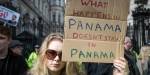 Investigative journalists may rely more on artificial intelligence in the future
During the Panama Papers leak, journalists made use of machine learning to organise data. A new research project will explore how such methods can be employed in investigative journalism. -
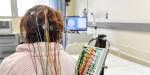 A simple brain test can detect early signs of Alzheimer’s
A routine brain test already available in many hospitals, combined with artificial intelligence, can detect early signs of Alzheimer’s disease — without needles or expensive brain scans. -
The Economics of Banking (ØABED2300)
-
Guide to the use of KODEM
This is a guide to how researchers can use existing data in KODEM, as well as buy or apply for a free space for collecting new data. -
FALLPREVENT: Implementation of evidence-based, fall-prevention programmes in the health care services: Quality, competency and effectiveness
In this project we aim to develop and test an innovative user-based programme for the implementation of falls-prevention programmes in Norway. -
Picture-based app for symptom monitoring in hospitalized children
In this PhD project, we will adapt, test, and prepare PicPecc app for use in Norwegian healthcare to support systematic symptom monitoring in children. -
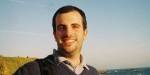 First Ph.D. in intelligent health
Pedro Lancastre is the first Ph.D. in Intelligent Health at OsloMet, and he will be joining the NordSTAR team. -
Strategic Human Resource Management (BALH3100)
-
Involving young people in research and development of services, with the school health service as an example (UngPuls)
UngPuls will test knowledge-based methods for youth participation in research and service design. -
Artificial intelligence in healthcare
At OsloMet we work on developing algorithms and models using machine learning tailored towards applications in medical research that will help to solve the challenges in the healthcare sector. -
English in Teacher Education (M1GEN3100)
-
BRO: Roadmap for sustainable radical task sharing
The project will develop and test a new model for organizing municipal health and care services. -
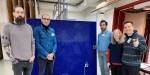 Trying to reduce damage to paintings
OsloMet and Munch Museum investigate how mechanical loads affect porous canvas paintings during transport of Munch's paintings. -
 New paper in Nature’s Scientific Reports
Professor Pedro Lind and a team of researchers from Simula Research Laboratory recently published a new paper. -
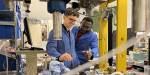 The first students taking the Master's in Geotechnical Engineering at OsloMet
"I like to visit The Norwegian Geotechnical Institute. It gives us access to a state-of-the-art laboratory and opportunity to learn from the very best in the field," explains Jacob. -
 Large grant for research on autonomous searches
OsloMet researchers have received NOK 11.84 million for research into machine learning inspired by the eyes' search for visual information. -
 Moving to Norway
Are you thinking of moving to Norway to join OsloMet? We have one campus in the city centre of Oslo and one right outside of Oslo. -
 How to get more people to bicycle
In his new book, cycling researcher Daniel Piatkowski shows how we can get even more people out of cars and onto bikes. -
Perspectives on Crisis, Change and Reform in the Public Sector (OASV4700)
-
 MSCA fellows to OsloMet
Three researchers at OsloMet have been awarded a research fellow through the EU's prestigious mobility programme Marie Skłodowska-Curie Actions (MSCA). Two more researchers are on the waiting list. -
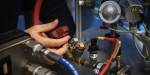 OsloMet launches a master's programme in mechanical engineering
OsloMet launches a Master of Science programme in mechanical engineering in 2024. The new master has a particular focus on sustainable technology. -
 "Democracy has to withstand everyday use"
How do we build a democracy that can handle conflict and disagreement? Kristin Skare Orgeret leads OsloMet's research initiative A Resilient Democracy. -
Quality in study programmes
On this page you will find information about how OsloMet work with educational quality in study programmes. -
 Innovation Award to Gustavo Mello
AI Lab leader Gustavo Mello was awarded the Innovation Award for his many efforts to create and strengthen interdisciplinary collaborations between the AI Lab and other research groups at OsloMet. -
Hand hygiene, infections prevention, and antibiotic use in nursing homes
The purpose of this study is to increasing adherence with hand hygiene, contributing to the reduction of healthcare-associated infections (HAIs) and reducing the use of antibiotics in nursing homes. -
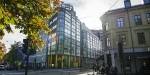 Get to know OsloMet
Through the students we educate and the knowledge we produce, Norway's most urban university helps drive the welfare state forward. -
How to use Oria
In the search engine Oria you will find printed and electronic resources available at OsloMet and other Norwegian universities and colleges. -
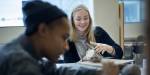 It takes courage to create
Resistance and obstacles are needed to unlock creativity, according to Arild Berg, artist and professor at OsloMet. -
Admission to international master's degree programmes
How to apply for international master's degree programmes. -
 What motivates Ukrainian refugees to return?
Researchers from NIBR will in a new project examine what might motivate Ukrainian refugees to return. -
Behavioural principles – from animal models to human cultures
The research group consists of two laboratories: the experimental analysis of behaviour lab and the cultural selection and behavioural economics lab. -
 Providing for the future: to use or not to use Norway’s oil and gas
How did a desire to preserve oil and gas for future generations and protect the environment turn into the largest sovereign wealth fund in the world and the foundation of the Norwegian welfare state? -
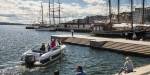 Where to live in Oslo: your guide to the best student housing
As an international student, one of the most important decisions you make before coming to Norway is where to live—a choice that will have a significant impact on your experience in Oslo. -
 To end a pandemic, consider socioeconomics
Norway is starting its vaccination programme and people facing high medical risk are first in line. But medical conditions aren’t the only factors to consider when protecting people from a deadly virus. -
 The tiny secret to healthier fish
OsloMet professor believes that the key to developing healthy and sustainable salmon aquaculture is in understanding their micro-RNA. -
 Immigration to Regulated Professions Under Scrutiny
Previously, it was difficult for nurses from countries outside the EU to find relevant work in Norway. New programs make it much easier, but not all problems are solved. -
 Why is it so challenging to distribute COVID-19 information to the elderly in Norway?
People consume information in different ways. Catering to the needs and habits of the majority when conveying information can amount to discrimination against other groups—including the elderly. -
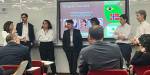 OsloMet researchers part of delegation to Brazil
Researchers Karine Maria Porpino Viana and Yuri Kashara from OsloMet participated in the G 20 seminar on climate change in Brazil in September 2024. -
 How to prevent people from becoming radicalised
If we are serious about keeping people from radicalising and committing acts of terrorism, the work begins long before they become active on extremist websites. -
 How to communicate effectively during a pandemic
There are some common mistakes the media and health authorities make when communicating a pandemic threat, according to Professor Harald Hornmoen. -
 How to make AI we can trust
Artificial intelligence offers great promise, but suffers from a trust deficit. Researchers at OsloMet are seeking to make this technology more trustworthy and, ultimately, more sustainable. -
 An AI solution to aches and pains
The Centre for Intelligent Musculoskeletal Health (CIM), OsloMet's new Centre of Research Excellence, uses AI to develop innovative and effective interventions for musculoskeletal health. -
 A holistic approach to supporting victimized children
Barnahus is an innovative model of caring for and supporting children who have been the victim of violence and sexual abuse. It provides a safe and supportive environment to meet their legal, medical, and psychological needs. -
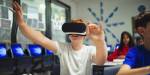 Bringing the classroom to life with VR
How can we make teaching about climate change more engaging? Deniz Atal Demirbacak is researching how virtual reality (VR) can be used to engage lower secondary pupils. -
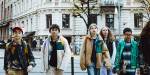 How children use clothes to fit in
A new study shows how children in Oslo explore social norms and community through their wardrobes and why being like everyone else is more important than standing out. -
 Solid program at The Nordic Quantum Life Science Round Table
The Nordic Quantum Life Science Round Table (NQLS) presents a varied and solid program for the invited participants. -
 NordSTAR presented keynote on AI Trustworthiness
NordSTAR, recently took centre stage at the BMW Research Group Machine Learning and Big Data event, where they delivered an insightful keynote presentation on the quantitative assessment of AI trustworthiness. -
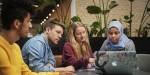 Five ways you can stay connected to OsloMet
Start an alumni group, stay in touch with your professors, and perhaps even consider a PhD. Check out the different ways you can continue your OsloMet experience even after you've left Oslo. -
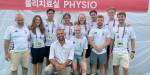 Physiotherapy students contribute to the Homeless World Cup
As per tradition, physiotherapy students from OsloMet were on hand to contribute in the nineteenth Homeless World Cup. -
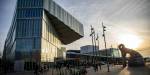 OsloMet invites you to the SDG Conference 2026
The annual sustainability conference in the higher education sector will take place in Oslo on February 2–3, 2026. -
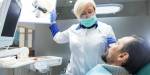 Low-income earners skip going to the dentist
The financial crisis in Europe has led to fewer people with low incomes going to the dentist. This is also the case in Norway. -
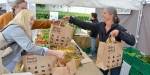 European consumers motivated to support locally-produced food
How sustainable is local food trade in Norway and other parts of Europe, including buying directly from the producer? As it turns out, sustainability is present in slightly unexpected ways. -
 How to make digitalisation work for all citizens
We can access bank accounts, healthcare, and social benefits through the internet using our phones and computers, yet not everyone is able to take advantage of these technologies. -
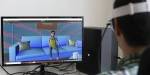 Using AI to improve investigative interviews with children
Researchers and experts in the field of interviewing children are using artificial intelligence to develop new training methods for the police and the Child Welfare Services. -
 No pedagogical reasons to continue offering hybrid teaching
Combining remote and in-person teaching demands more preparation from both teachers and students. It also results in poorer learning outcomes. -
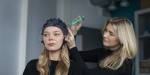 Measuring brain activity to discover mental health issues
Could there be a way for your doctor to diagnose depression and anxiety based on your brain activity? -
 Using artificial intelligence to detect and fight dementia
Dementia affects millions of people each year. It’s a problem that most of us will encounter in our lives and it does not yet have any cure or even effective early detection methods. -
 Using botox to prevent migraine and treat pain
Millions of people experience chronic pain and migraine, but until recently there were very few treatments available. That’s changing now, thanks to professor Parisa Gazerani’s work. -
 Local government was key to managing the pandemic
A major Nordic study shows that local authorities played a crucial role in handling COVID-19 – and why trust and flexibility are key to surviving future crises. -
 Only 1 in 10 Ukrainians want to return
Very few Ukrainian refugees say they want to return to Ukraine when the war ends. Half of them wish to stay in Norway permanently. -
 Ten ways to survive the Norwegian winter
We won’t even try to deny it—winters here are definitely on the long side. Fortunately, there are plenty of things you can do to not only survive winter in Oslo, but embrace it. -
 A guide to making friends with Norwegians
While befriending the locals may take a little extra effort, it can help you experience Norway from a whole new perspective. -
 The best way to work from home
OsloMet students created a manual with good tips on working from home or anywhere else. -
UngVold 2023 – Trends in Exposure to Violence
In 2023, NOVA collected new data for the Youth Violence survey from more than 16,000 Norwegian youth, mapping Norwegian children and adolescents’ experience of violence and abuse during their upbringing. -
“Free to play – pay to win”: Understanding young people’s social inclusion through their consumer behavior in gaming
PhD project about social inclusion and exclusion though gaming. -
 How can we go from fast to slow fashion?
The solution is right in front of our noses, says professor in clothing and sustainability. -
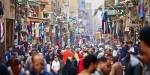 The planet is now home to 8 billion people
How many people can our planet sustain? This is one of the questions demographer Marianne Tønnessen is asking as Earth reaches this population milestone. -
 OsloMet to launch master’s degree programme in Art Therapy
From autumn 2024, OsloMet will offer a master’s degree programme in art therapy. -
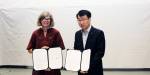 LG and OsloMet in collaboration to develop heat pumps
OsloMet is collaborating with the multinational company LG Electronics to develop heat pumps for extreme cold climates. -
 NOVA researcher appointed to the Intimate Partner Homicide Commission
Researcher and sociologist Anja Bredal has been appointed as a member of the State Commission for Intimate Partner Homicides. -
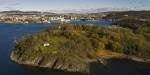 Student-friendly ways to enjoy autumn in Oslo
Whether you’re a returning student or are brand new to Oslo, autumn is a great time to explore the city. -
 Eight ways to experience Norwegian culture in Oslo
Embrace the great outdoors, sample the local cuisine, and hang out with friends at a safe distance. Here are some ways to spend your free time like the locals do. -
 Summer in Oslo is pretty close to paradise
The light never really goes away, it never gets too hot, and the water in the fjord is so clean you can swim in it. Welcome to Oslo in the summertime. -
 From PhD candidate to full-time faculty member
Marco Tagliabue arrived in Oslo from Italy in February of 2015 armed with just two suitcases and an ambition to pursue his doctoral studies. Then he never left. -
 Predrag wanted to study something useful and relevant
Driven by a need to study something both relevant to current issues and beneficial to society, he chose the Master's Degree in International Development, Education and Sustainabilities at OsloMet. -
 We need to take better care of our personal data
Websites often make it difficult to understand what kind of personal data they are collecting from visitors. The rules governing data collection should be tightened, argues one OsloMet researcher. -
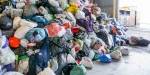 Brand new clothes end up as waste due to overproduction
Enormous amounts of clothing never get worn. Much of it contains plastic and other synthetic fibres. -
 "We need to talk about how we assess teacher students"
We often discuss how assessment should take place. But do we consider the purpose of assessment? asks an OsloMet researcher. -
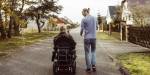 Are we ready to care for our elderly family members?
Norway is pushing to shift the responsibility for elderly care away from the state and onto family and communities. This may relieve straining municipal budgets, but will people step up? -
 Natural, organic and vegan: greenwashing is now harder to detect
Marketing regulations are having an effect, but it has not become easier for consumers to make sustainable choices when buying clothing and cosmetics. -
Language and Learning Environment in Early Years - ECEC to Primary School (SAMBA)
Our research focuses on children's social, linguistic and cognitive development in early childhood education (ECEC) and in early primary education. -
Artificial Intelligence Lab
OsloMet AI Lab administers research and student projects in artificial intelligence, both applied and basic research, including theory and the use of machine learning in different areas. -
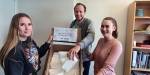 Many students want to protect themselves with a face mask
The infection situation in Oslo calls for more use of masks, and many students at the Department of Civil Engineering and Energy Technology used the opportunity to supply themselves with some the 20,000 masks they have received from a partner. -
 OsloMet will use artificial intelligence to warn of extreme climate.
NordSTAR at OsloMet will work on Artificial Intelligence (AI) methods for forecasting and monitoring extreme climate events in the DHEFEUS project. -
 Awarded millions to research youth sexuality in a digital age
NOVA at OsloMet has been granted eight million NOK from the Research Council of Norway's FRIPRO funding for groundbreaking research. The researchers will investigate youth sexuality and sexual risk in a digital age. -
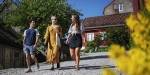 Want to enrich your stay in Oslo? Learn Norwegian!
By learning some Norwegian, you’ll become more integrated into Norway’s culture and begin to discover Oslo in a whole new way. -
 Student at Kjeller? Get to know the local area
Lillestrøm is just a short drive away from Kjeller campus, and here you have access to most of what you need when you are done for the day. -
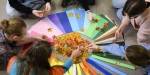 OsloMet to launch master’s degree programme in art therapy
From autumn 2024, OsloMet will offer a master’s programme in art therapy. -
 How Tawfique aims to enhance the production of biogas
Master's student Tawfique is interested in how control engineering can be utilised within renewable energy., and explores this in Norway's largest wastewater treatment plant. -
Response to Climate Change in Banská Bystrica City, Slovakia
A project about preparing the Slovak city Banská Bystrica's action plan for climate action. -
Knowledge-based input network to the rebuilding of Ukraine
The project (HRMODA) will establish a Nordic-Baltic network with specific expertise on Ukraine, to contribute to the country's rebuilding and sustainable development -
Frequent callers to the Norwegian emergency medical communication centres
The purpose of this PhD project is to increase knowledge about so-called "frequent callers" to the emergency medical communication center (EMCC). -
Knowledge and Approaches to Teach Socio-Scientific Mis/Disinformation
The flood of socio-scientific information on issues like pandemics, climate change, and natural resource scarcity represents just three of the critical global challenges facing our world today. -
Government responses to high influxes of protection seekers (GOVREIN)
A comparative analyses of eight European countries' responses in 2015/16 and 2022/23 -
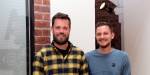 Erasmus+ gave a lot extra
The two research assistants from Germany knew a lot about predicting electricity prices, which OsloMet benefits from. -
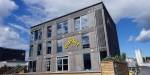 Robots to the rescue: Exploring the Oslo Fjord with autonomous vehicles
OsloMet’s Oceanlab investigates the unexplored depths of the Oslo Fjord, from their new facility in Filipstadkaia. -
 Making battery replacement easier for drones
Giorgio Salvemini wants to enhance the efficiency of drones by enabling them to automatically switch to fully charged batteries. -
Robots to the rescue: Exploring the Oslo Fjord with autonomous vehicles
OsloMet’s Oceanlab investigates the unexplored depths of the Oslo Fjord, from their new facility in Filipstadkaia. -
Making battery replacement easier for drones
Giorgio Salvemini wants to enhance the efficiency of drones by enabling them to automatically switch to fully charged batteries. -
Co-occurrent pain and psychological distress: From adolescence to adulthood
The project will provide new insight into the long-term consequences of early onset co-occurrent pain and psychological distress. -
Ambulance workers’ assessment of self-determination and capacity to consent
The aim of this PhD project is to investigate ambulance workers' knowledge and experiences to assess the right to self-determination and capacity to consent in prehospital meetings with patients with mental health illnesses and/or drug-related issues. -
 Reflex: Revising work time flexibility policies to promote work inclusion
In the REFLEX project, we investigate the relationship between work-time flexibility and work inclusion. -
Enhancing student teachers' abilities to facilitate learners' digital competence (ENHANCE)
The project aims to strengthen teacher education programmes across Europe, equipping student teachers with the digital readiness and capacity to empower learners’ digital competence and address digital exclusion. -
Appointments committees and council
The right to make decisions regarding appointments to all positions is delegated to the Faculty of Technology, Art and Design, with certain exceptions. -
 The welfare state has strong support among young people
Are young adults entitled individuals who won’t contribute to society? Not quite. According to new research, Generation Z are happy to pay their taxes. -
 International employees reflect on the university's response to COVID-19
Several international staff members discuss their experiences adapting to working remotely following the initial outbreak of COVID-19 and the support they got from the university during this challenging time. -
 Design students aim to solve problems and improve people’s lives
Rob Starling chose OsloMet for his master’s degree in product design because he wanted to expand his digital toolkit and explore the department’s impressive workshop facilities. Now he has embarked on a whole new career within service design. -
 Master's Trick: “It was important to set everything else aside”
Anders Blomberg found a clever way to put his phone away. The result was the award for the best master’s thesis at OsloMet. -
 Unemployment is harmful to your health – especially if you are a man
Men suffer more health problems as a result of unemployment than women, according to recent research from OsloMet. -
 – We need to imagine a more sustainable future for Norway’s welfare state
If Norway wants its welfare state to support future generations, and today’s population, research says it will need to imagine its place in a more sustainable global system. -
 Researchers seek to better understand the lives of young people in Norway
Using a variety of methods, OsloMet researchers are gaining new insights into young people's opinions, struggles and aspirations. -
 NordSTAR and the AI Lab discuss how AI can contribute to journalism
On Friday, the 1st of April, we organised a panel at the SKUP 2022 conference together with the Department of Journalism and Media Studies. -
 NIBR project receives research funding to strengthen the inclusion of young refugees
A new research initiative aims to develop innovative solutions to improve the integration of young refugees in Norway, placing youth themselves at the center as co-creators in the process. -
To touch and be touched: Communication and interaction in physiotherapy practice
Touch as a therapeutic tool is essential in physiotherapy practice and used for various therapeutic purposes. -
Nanoparticulate drug carriers for delivery of cutting-edge antimicrobials to biofilms
We are developing nanoparticles that can act as carriers for new antibiotics to better treat biofilm-based infections. -
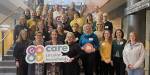 The Circular consumption Activities to tRansform households toward material Efficiency (CARE)
CARE project empowers households to reduce food waste and extend the lifespan of clothes. -
From Conversation to Text: AI-Supported Prewriting in Lower Secondary School
PhD project examining how students develop ideas and experience authorship when, during prewriting, they use a chatbot that only asks questions and does not generate text. -
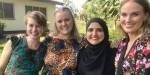 Holistic approach to increased student exchange in early childhood education (HETBLU)
The HETBLU project aims to strengthen the culture for internationalization and increased student exchange at early childhood institutions. -
Vocational Teachers as Facilitators in the School-to-Work Transition (School4Work)
We will develop knowledge that will enable vocational teachers to facilitate students’ transition from the school-based part of vocational education and training (VET) to apprenticeship. -
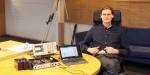 Measuring blood sugar without pricking your finger
Diabetic patients should be able to monitor blood sugar levels without pricking fingers. The students are trying to find a solution. -
 ‘Universal design will be important in the future; all the big tech companies are focusing on it.’
‘People are trying to find practical digital solutions to complex problems. This is a good reason to study Universal Design of ICT,’ says Faisal. -
Accessibility statement for oslomet.no
OsloMet strives to provide an optimal website to all people, regardless of abilities. -
 Making universal design a reality
When we design technology to be usable for everyone, we enable them to participate in society, regardless of disability or impairment. The United Nations refers to this as universal design. -
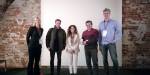 Nordic Quantum Life Science Round Table passing the Torch to Norway for 2024
The 2024 edition of The Nordic Quantum Life Science Round Table will be organized by NordSTAR, OsloMet Quantum Hub, OsloMet AI Lab, and Simula. -
 How to improve your chances of landing a job in Norway
Learn Norwegian, do your research and don’t be afraid to network. Follow these four steps to help launch your career in Norway. -
Do you have an assignment you’d like master's students to tackle?
Intelligent Health facilitates private and public master's thesis collaboration on topics within health and technology. -
 Introduction to the Master’s programme in Applied Computer and Information Technology
OsloMet offers a Master’s programme in Applied Computer and Information Technology (ACIT), with no fewer than eight specialisations. -
From Boys to Men: Diverging Developments of Masculinity with Varying Consequences? (FRAGMEN)
What are the characteristics of masculinity and masculine practices in contemporary Norway? -
Teaching problem solving skills to enhance complex human behavior – vocal mediating strategies
The project aims to explore diverse strategies employed in solving different complex tasks – problem-solving strategies. -
The Child´s Right to Family Life and Stability in Foster Care
This project will explore how children in foster care can experience family life and stability through human rights-based practices. -
Telehealth instruction and supervision to support caregiver administered functional analysis and behavioral interventions to reduce problematic behavior and enhance behavior repertoire in individuals with rare genetic syndromes
This PhD project aims to explore the utility of telehealth technologies to provide caregiver administered procedures of assessment and interventions to individuals with rare genetic syndrom. -
 Norway leading in digitalization, but not everyone is benefitting
Digitizing government welfare services is supposed to help make services more accessible to everyone. Are they unintentionally leaving people behind? -
 Are measures designed to control the spread of Coronavirus working? And at what cost?
Svenn-Erik Mamelund is something of a rarity: a social scientist who specialises in pandemics. It is little wonder, then, that the OsloMet researcher is in high demand. -
 – Fast and fair transformations to low-carbon societies are difficult without critical climate education
Professor Hanne Svarstad argues that rapid and just climate action requires that people are offered education to understand the most important consequences of the various climate mitigation alternatives. -
 Many young people have sex for the first time to “get it over with”
For many adolescents, having “had sex” equals having had penetrative intercourse. Several say they had sex the first time mainly to avoid being the one who “hasn’t done it” — not because it felt right in the moment. -
 Women are persistently underrepresented in the media
Norway is widely recognised as an egalitarian country, yet the media industry has failed to live up to this ideal. -
What is carbon storage?
"It makes sense to clean up after yourself," says Associate Professor Rebecca Allen in this episode. -
 What characterizes Norwegian entrepreneurs? And why are there so few of them?
How do financial shocks affect who dares to take the leap and what we can do to strengthen entrepreneurship and innovation? -
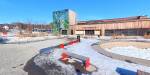 The design of streets and roads has a lot to say for public health
City planners, architects and geographers from OsloMet contribute to Skarnes becoming a more health-promoting settlement, which better includes families with children, the elderly and disabled citizens. -
 New Marie Sklodowska-Curie Fellow joins NOVA to study migrant women in Scandinavian healthcare
Sociologist Tanja Schroot has joined NOVA as a Postdoctoral Fellow. In her project she will examine how lifelong learning can strengthen the integration of female migrant healthcare workers in Scandinavia. -
 Alumni
The alumni network enables graduates and former exchange students to stay connected to the university and each other. Members receive invitations to international alumni events as well as occasional updates from OsloMet. -
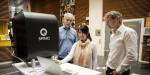 Maryam helps a public transport company to get ahead of technological development
The public transport company Ruter likes to be at the forefront of technology development and hired OsloMet graduate Maryam to explore the possibilities of quantum technology. -
Application process for individual PhD courses at the Faculty of Health Sciences
If you are admitted to a PhD programme at another institution or have completed your master's degree, you can apply to take individual PhD courses with us. -
The effect of a digital patient intervention on self-reported adherence to medications
In this PhD project we will create and validate a self-reported adherence questionnaire and use this to evaluate the effect of a digital patient intervention designed to increase adherence to medications in a specific patient group. -
Help to Find Temporary Accommodation – What Promotes Good Practices in the NAV Offices?
In this project, we focus on NAV's work in providing assistance with temporary housing. -
Sauna and cold water immersion to prevent and reduce stress and mental disorders
The Clinical Neuroscience project group will investigate whether sauna and cold water immersion can be useful to prevent and treat stress-related conditions such as pain and psychological distress. -
Dementia Villages – providing better and safer person-centred care to people with dementia
The project explores how the physical environment of Dementia Villages influences healthcare personnel’s daily work, job satisfaction, and the quality of person-centred dementia care. -
Green blood: Undressing hierarchies to reduce pressure on land through Forest Finn perspectives
In this project, we explore land‑based and relational perspectives and practices to develop new understandings of how pressure on nature can be reduced. We do so through an interdisciplinary approach grounded in Indigenous and minority perspectives. The project aims to contribute to a shift in environmental discourse by fostering embodied connections to forests and land through the body, clothing, and footwear. -
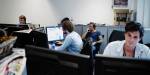 Indoor climate in open-plan offices may affect health
Employees in open-plan and shared offices are more likely to report poor indoor climate compared to those working in private offices. -
 One in four seniors feel digitally discriminated against
Many seniors feel pressured to participate digitally, but just as many celebrate the way the internet enables them to participate in society. -
 A whole new way of organising social services
As a master's student at OsloMet, Ley Muller learned to analyse and engage with alternatives to the American approach. -
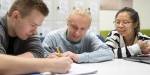 Information for parents/guardians about Young in Oslo 2023
Around 60,000 pupils from year five to the third year of upper secondary school from all Oslo districts are invited to participate in Young in Oslo 2023. -
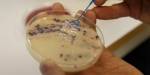 The strange and deadly consequences of bacterial sex
An OsloMet researcher is seeking to better understand how and why bacteria exchange DNA—and how to prevent them from doing so. -
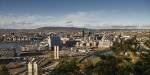 Oslo, the divided city
A deep socioeconomic divide splits Oslo from east to west. It will continue to deepen unless it is more widely acknowledged and addressed. -
 Urban Ankamah wants to make education more accessible for young people in his home country
Urban has a dream. One day he wants to return to Ghana and make education more accessible for young people. -
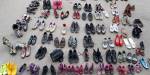 Wealthy cities' role in reducing textile waste
Promoting slower consumption and more local reuse are among the suggestions for what wealthy cities can do to reduce textile exports to poor countries. -
 Three women on the board can reduce corporate misconduct
Women in the boardroom are key to curbing corporate misconduct, according to a new study. -
Three women on the board can reduce corporate misconduct
Women in the boardroom are key to curbing corporate misconduct, according to a new study. -
Green OsloMet
OsloMet wants its staff to be climate conscious, and its students to obtain the competencies necessary to meet both current and future climate challenges with innovative actions and sustainable solutions. -
 She thought they were going on holiday – then her husband confiscated her and the children’s passports
Violence in close relationships does not stop at national borders. Perpetrators may exploit the family’s ties to another country to threaten and pressure family members. -
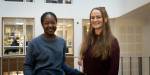 "I feel like I have a place to stay anywhere in the world"
Vivianne from Norway and Alicia from Switzerland are pursuing a Master's Degree in International Development, Education and Sustainabilities. -
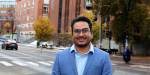 He receives OsloMet's prize for Promising Researcher: “I always wanted to help others”
Bineeth Kuriakose believes that artificial intelligence (AI) has great potential to help people – if it is used in an ethical and transparent way. -
Crosscare-Old: A Cross Sectoral Approach to High Quality Healthcare Transitions for Older People
The project aims to increase the understanding of the role of cross-sectoral factors that constitute barriers for high quality care transitions for older people from hospital to municipal care. -
Social technologies and social relationships – the moral implications of using technology to stay connected
A pressing issue in contemporary technology ethics is what happens to our social relationships when they intersect with social technologies. -
Darkness on the horizon? Exploring the response to contestation of trade policy in Europe
Free trade is under pressure. Fear of job losses and growing inequality has given rise to calls for protectionism and economic nationalism. -
Sustainable Societies in the 21st Century: From Welfare States to Eco-social States (WEST)
The WEST project examines what we call the ecological dilemma of the Norwegian welfare state. -
Patient specific functional scale to measure rehabilitation goals for patients with acquired brain injury
This project will investigate the Patient Specific Functional Scale (PSFS) as a measure to document and monitor patient-identified rehabilitation goals for patients with acquired brain injury (ABI). -
In-service training to improve the preschool classroom environment for children with special needs
The limited amount of training provided to staff in preschools poses a challenge in implementing evidence-based practices. -
Teachers' and leaders' representation and participation in collaborations established to strengthen teacher education (REPRESENT)
The purpose of this survey is to gain increased knowledge about teachers’ and leaders’ representation and participation in collaborations established to strengthen the quality of teacher education programs. -
Bringing Home Languages to Light: Perspectives from Polish Families and Professionals in Norwegian ECECs
PhD project exploring how home languages are supported and implemented in Norwegian early childhood education and care (ECEC), as viewed from the perspectives of minority parents and pedagogical leaders. -
Objective Structured Clinical Examination (OSCE) – A comprehensive approach to assessing nursing students’ clinical competence
The project explores experiences with OSCE as an assessment method in bachelor's nursing education at OsloMet, aiming to enhance quality in assessment and students’ achieved learning outcomes. -
Working together to enhance student active and integrated learning in physiotherapy education (We-SAIL)
This project extends I SAIL through a Nordic collaboration that co creates, pilots, and shares student active, integrated learning approaches to support students’ transition into physiotherapy studies. -
Poverty and Violence: Children’s Exposure to Violence in Light of the Family’s Economic Situation
The project examines what existing research tells us about connections between family economic conditions and children’s and young people’s exposure to violence in the family. -
EUROSHIP – Closing Gaps in Social Citizenship. New Tools to Foster Social Resilience in Europe
The overall aim of the EUROSHIP project is to provide an original and gender-sensitive assessment of the current gaps in social protection across Europe. -
 Sustainability – Urban and natural places as your classroom
Do you want to learn more about how to work as a teacher with societal and environmental challenges in creative and engaging ways? -
 An inclusive OsloMet
Inclusivity is one of OsloMet’s core values. Our strategy 2050 commits the university to upholding this value and to promoting equity and diversity. -
Research and development at the Faculty of Education and International Studies
Research, development and innovation activities at the faculty are focused on contributing to society, to our target groups, and to our region. We contribute with relevant knowledge of high quality. -
 Extending product life yields a greater environmental impact than any other measure
Sustainable consumption should not be reduced to reuse and recycling, according to SIFO researchers. -
University Library
We are here to spread knowledge, contribute to research and students' learning. -
 Norway invests billions to promote gender equality in Africa – but much of the work goes unseen
Norwegian state funds are meant to advance gender equality in some of the world's toughest markets. A new study shows much is being done – but often behind the scenes. -
OsloMet Digital Journalism Research Fellow - call for applications
We announce a call for applications to become an OsloMet Digital Journalism Research Fellow. -
Department of Early Childhood Education (BLU)
The department offers bachelor's degree programmes and a master's degree programme in early childhood education, and continuing education -
Practical information about travel and accommodation
This information applies to members of the assessment committee. -
 How do political parties stop hate speech on Facebook?
A study shows that political parties tend to hide hate speech on Facebook rather than deleting it. This is unfortunate, according to journalism professor Karoline Andrea Ihlbæk. -
 Space Syntax has Come of Age: A comprehensive review of literature from 1976 to 2023
The annual scientific output has grown, has spread to many countries, and contains progress in both theory and applications. The field has become important in urban planning and urban design. -
Applying for admission to single PhD courses at the Faculty of Technology, Art and Design
If you are admitted to a PhD programme at another institution, you may apply to take standalone PhD courses. -
Our work on sustainability
The world faces large and complex challenges that we need to solve through collaboration and partnerships. At OsloMet we are committed to do our share.
